

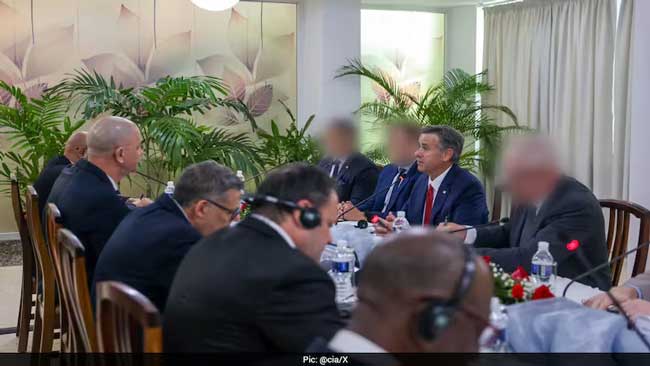
Desk : CIA Director John Ratcliffe has made a rare high-level visit to Cuba, holding talks with senior government and intelligence officials as the island nation grapples with a worsening energy crisis and prolonged power shortages.
According to officials familiar with the development, the meetings in Havana included Cuba’s Interior Ministry leadership, top intelligence officials, and Raúl Guillermo Rodríguez Castro, the grandson of former Cuban leader Raúl Castro. The discussions reportedly focused on national security issues, the ongoing energy crisis, and possible channels for future dialogue between Havana and Washington.
US Pushes for Reforms Amid Humanitarian Strain
During the visit, Ratcliffe is believed to have conveyed Washington’s position that any improvement in bilateral relations would depend on “meaningful reforms” by the Cuban government. At the same time, US officials have indicated a willingness to keep diplomatic channels open, though under strict conditions.
The visit is being viewed by analysts as part of a broader US strategy that combines pressure with limited engagement, aimed at encouraging political and economic changes in Cuba while addressing urgent humanitarian and energy concerns.
Cuba’s Worsening Energy Crisis
Cuba is currently facing one of its most severe energy crises in recent years. Chronic fuel shortages have significantly disrupted electricity generation, leading to widespread and prolonged blackouts across the country. The situation has been further aggravated by economic constraints and long-standing international sanctions.
The power shortages have intensified public frustration, adding pressure on the government as it struggles to stabilize essential services.
Diplomatic Signals or Rising Pressure?
Observers suggest that the visit could represent either a cautious opening for renewed dialogue or an extension of Washington’s pressure-based approach toward Havana. While both sides continue to maintain long-standing political differences, the worsening humanitarian situation in Cuba appears to be creating space for limited engagement.
However, significant gaps remain between the two countries, particularly over governance, sanctions, and political reforms.