
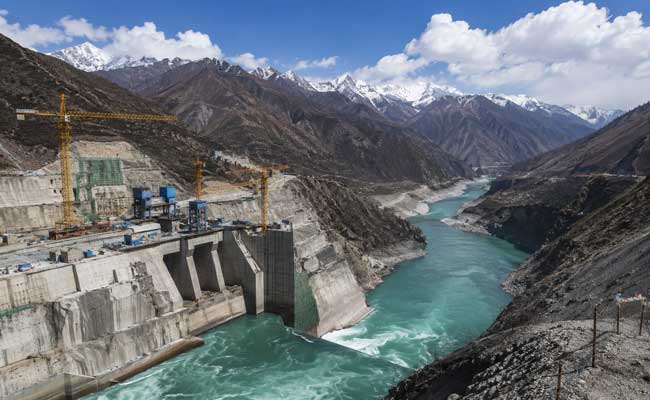
Desk : China has officially advanced construction of what is being described as one of the world’s largest hydropower projects on the lower reaches of the Yarlung Tsangpo River in Tibet. The project is reportedly located just about 50 kilometers from the Indian border, prompting growing concerns in India, particularly in the northeastern states that depend on the river system downstream.
According to media reports and satellite imagery, China is moving ahead rapidly with the project despite repeated concerns expressed by India regarding its potential impact on downstream regions. Experts believe that any large-scale intervention in the river’s natural flow could have significant consequences for the Brahmaputra basin.
The Yarlung Tsangpo originates in Tibet and enters India through Arunachal Pradesh, where it is known as the Siang River. It later flows into Assam and becomes the mighty Brahmaputra. Because of this geographical connection, any major infrastructure project on the river upstream carries strategic, environmental, and economic implications for India.


Indian officials have warned that the mega dam could alter the river’s natural flow patterns and affect local ecosystems. Concerns have also been raised about the possible impact on agriculture, water availability, and the livelihoods of communities living in downstream regions. Experts further caution that changes in water management could influence flood patterns in Arunachal Pradesh and Assam, potentially increasing uncertainty during monsoon seasons.
China maintains that the project’s primary objective is large-scale hydropower generation and clean energy production. However, for downstream countries such as India, the long-term implications of such a massive river engineering project remain a matter of serious concern.
The Government of India has stated that it is closely monitoring all developments related to the Brahmaputra river basin and China’s hydropower activities. In a written response to Parliament, the government emphasized that protecting the lives, property, and livelihoods of people living in downstream areas remains a top priority.
To address potential risks, India is pursuing a dual-track approach involving both diplomatic engagement and technical preparedness. New Delhi has urged Beijing to maintain transparency regarding transboundary river projects, share real-time hydrological data, and engage in prior consultations before undertaking major developments that could affect downstream countries.
At the same time, India is strengthening its preparedness in the northeastern region by upgrading flood forecasting systems, enhancing river monitoring networks, and reinforcing critical infrastructure. These measures are aimed at improving the country’s ability to respond swiftly to any emergency situation and minimizing potential risks to affected communities.
Beyond its role as a hydropower project, the Yarlung Tsangpo mega dam is increasingly being viewed as an issue with broader implications for regional water security, environmental sustainability, and strategic stability in South Asia. Its long-term impact could influence not only the future of the Brahmaputra basin but also the evolving dynamics of India-China relations.