

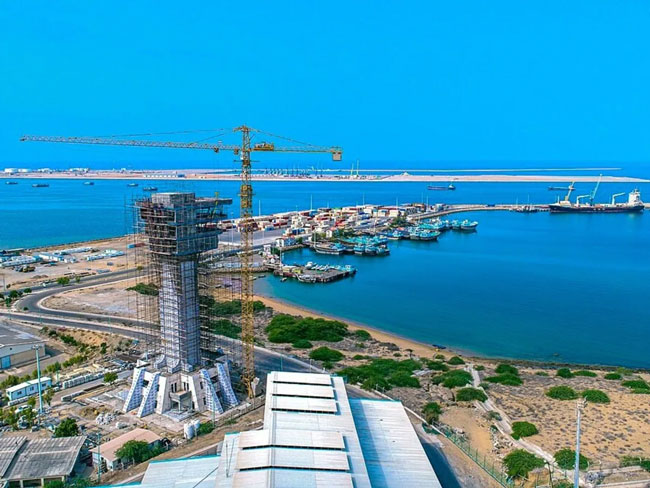
India is gradually reassessing its involvement in the strategically significant Chabahar port project in Iran, amid increasing uncertainty over U.S. sanctions that has cast doubts on the long-term viability of the initiative. The issue has gained renewed attention as Washington tightens scrutiny over economic engagements with Tehran.
Responding to queries on Friday, Ministry of External Affairs spokesperson Randhir Jaiswal said India remains in active dialogue with the United States on the matter. His remarks came amid speculation that New Delhi may scale back its participation in the project following the imposition of new U.S. tariffs and restrictions on countries maintaining trade links with Iran.
Jaiswal noted that on October 28, the U.S. Treasury Department issued guidance related to a conditional sanctions waiver valid until April 26, 2026. “We are engaging with the U.S. side to finalise the operational aspects of this arrangement,” he said.


OFAC Scrutiny and U.S. Strategic Pressure
The U.S. Treasury’s Office of Foreign Assets Control (OFAC), the primary enforcement body for sanctions policy, is closely monitoring India’s role in Chabahar. Analysts view this oversight as part of Washington’s broader strategy to increase economic and diplomatic pressure on Tehran, particularly by discouraging foreign participation in Iranian infrastructure projects. Chabahar, despite its regional utility, has not remained immune to this pressure.
Why Chabahar Matters to India
Located on Iran’s southeastern coast along the Gulf of Oman, the Chabahar port has long been a cornerstone of India’s regional connectivity strategy. The port provides India with a critical alternative trade route to Afghanistan and Central Asia, effectively bypassing Pakistan and reducing reliance on traditional overland corridors.
India has made substantial investments in the development and operation of key terminals at Chabahar. However, persistent U.S. sanctions have remained the single biggest constraint on the project’s expansion and commercial viability.
Exploring Options to Reduce Direct Exposure
According to officials familiar with the matter, India is in the process of transferring approximately USD 120 million as part of a move to end its direct equity participation in the port project. At the same time, discussions are underway on the possibility of creating a new entity to take forward Chabahar’s development.
Such an arrangement could formally remove the Indian government’s direct stake while allowing New Delhi to maintain indirect strategic support for the project. Notably, in September last year, the Trump administration announced its decision to revoke the sanctions exemption granted to Chabahar in 2018, further complicating India’s position.
A “Managed” and Calibrated Adjustment
Government sources emphasise that New Delhi is framing this transition not as an abrupt withdrawal but as a “managed and limited engagement.” The objective, they say, is to preserve strategic balance—safeguarding India’s regional interests while avoiding friction in its broader relationship with the United States.
As the April 2026 waiver deadline approaches, attention will increasingly focus on India’s next steps. Whether New Delhi retains a minimal technical and operational role in Chabahar or gradually distances itself further from the project is expected to become clearer in the coming months.