
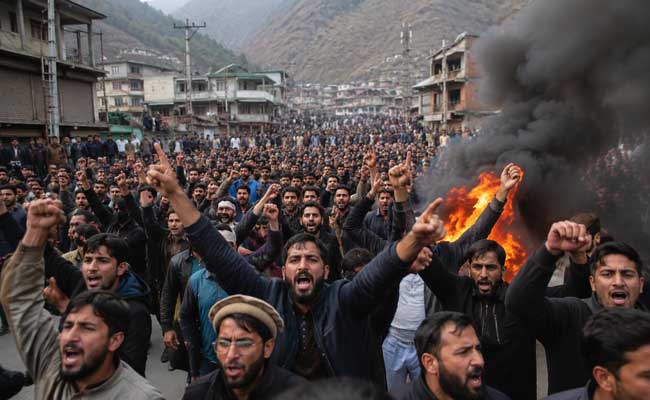
Pakistan-occupied Jammu and Kashmir (PoJK) once again appears to be standing at a volatile crossroads where the streets are no longer merely spaces of gathering, but have turned into loud expressions of deepening political discontent. The massive turnout in Rawalakot, where thousands of people raised slogans against Pakistan’s continued administrative control and policies, signals more than a routine protest. It reflects a simmering unrest that has been building over time and is now visibly surfacing in public space.
The demonstrators have alleged that during recent protests, civilian deaths and injuries occurred following reported firing by security forces. In response, they are demanding accountability, justice for the affected families, and an independent investigation. This is not simply a dispute over incidents; it is a fundamental question of trust between the governed and those who govern.
The rally’s demands extended beyond immediate grievances. Participants also called for the protection of civil liberties, restoration of political rights, and an end to what they describe as the suppression of peaceful dissent. These overlapping demands indicate that the issue is no longer confined to isolated events but has expanded into a broader challenge to governance itself.

A significant political dimension emerged as local leadership and representatives of the
Jammu Kashmir Joint Awami Action Committee
strongly criticized the administration’s handling of the situation. They argue that dialogue has been replaced by coercion, and negotiation by control, further intensifying tensions on the ground.
Meanwhile, the international human rights organization
Amnesty International
has also raised serious concerns regarding Pakistan’s recent actions in the region. The organization has accused the authorities of suppressing dissent, restricting political participation, and undermining fundamental freedoms ahead of the upcoming electoral process.
According to reports, tensions escalated after negotiations between stakeholders broke down, followed by a series of restrictive measures. The suspension of internet and mobile services, along with movement restrictions, has significantly impacted daily life and effectively limited the flow of information from the region.
While authorities may justify these steps as necessary for maintaining security, the larger question remains whether restricting civil liberties can offer a sustainable solution. History suggests that when dialogue weakens and coercive measures increase, dissent does not disappear—it deepens and becomes more entrenched.
The deployment of security forces and advisories for visitors to leave the region have further contributed to an atmosphere of isolation and uncertainty. What is unfolding is not merely a law-and-order situation but a reflection of a long-standing political imbalance that continues to remain unresolved.
At its core, the situation in PoJK is evolving beyond administrative friction into a deeper crisis of representation and rights. The demands being raised are no longer limited to immediate relief but extend to questions of dignity, voice, and political structure.
The central question today is not why protests are happening, but why avenues for dialogue continue to shrink. If this trajectory persists, the region risks entering a prolonged cycle where control may be maintained temporarily, but peace and trust become increasingly elusive.