

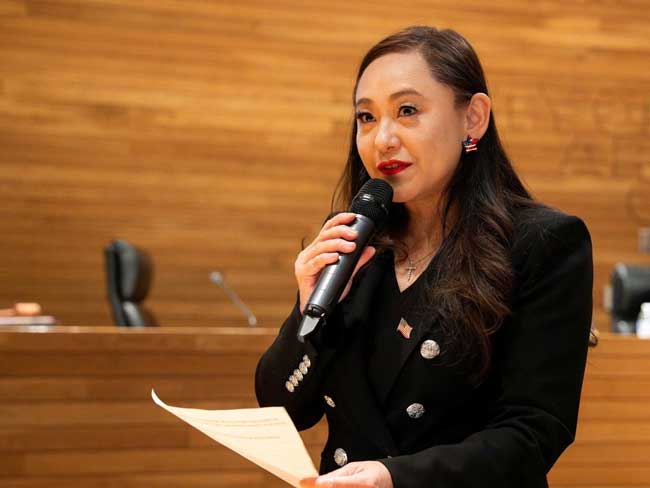
The case involving California’s Arcadia mayor Eileen Wang, accused of acting as an undisclosed agent of the Chinese government, is more than just another headline in the long list of espionage-related controversies. It forces a deeper question that democratic societies can no longer avoid: how secure are the institutions closest to the people when global rivalries quietly seep into local governance?
At the heart of the allegations is not only an individual’s alleged misconduct, but a system vulnerability. According to U.S. federal authorities, Wang and her former fiancé were involved in operating a platform that appeared to serve a diaspora community but allegedly carried political messaging aligned with a foreign state. While the legal process is still unfolding and guilt must ultimately be determined in court, the broader implications already extend far beyond one city hall in California.
Modern influence operations rarely announce themselves in dramatic fashion. They often move through softer channels—community engagement platforms, cultural outreach initiatives, or media networks that appear benign on the surface. This is precisely what makes such cases difficult and unsettling: the line between legitimate civic engagement and covert political influence can become blurred, especially in multicultural societies where international ties are natural and widespread.


If the allegations are proven, this case will underline a sobering reality: local government officials are no longer insulated from geopolitical competition. Cities, universities, and community organizations have become points of contact in global strategic contests, often without realizing the role they may be playing in larger narratives shaped far beyond their borders.
Yet, caution is equally important. Democracies are tested not only by external interference but also by how they respond to suspicion and accusation. Overreaction can damage trust within immigrant communities and risk turning legitimate cultural exchange into a source of fear. The challenge lies in maintaining vigilance without sliding into paranoia, and enforcing accountability without eroding civil liberties.
There is also a human dimension that should not be overlooked. The involvement of personal relationships in this case—between Wang and her former fiancé—adds complexity but should not distract from the institutional questions at stake. Influence operations, if proven, rely not only on ideology but also on proximity, trust, and access.
Ultimately, this case should serve as a reminder that transparency is not optional in public service—it is foundational. Whether at the city council level or the national stage, officials entrusted with public responsibility must operate under clear disclosure, especially when foreign connections exist.
As this legal process moves forward, the outcome will be important. But the larger task belongs to democratic societies themselves: strengthening safeguards, improving awareness, and ensuring that openness does not become an entry point for undisclosed external influence.
In an interconnected world, the question is no longer whether foreign influence attempts will occur—but whether institutions are prepared to recognize them without losing their democratic character in the process.