
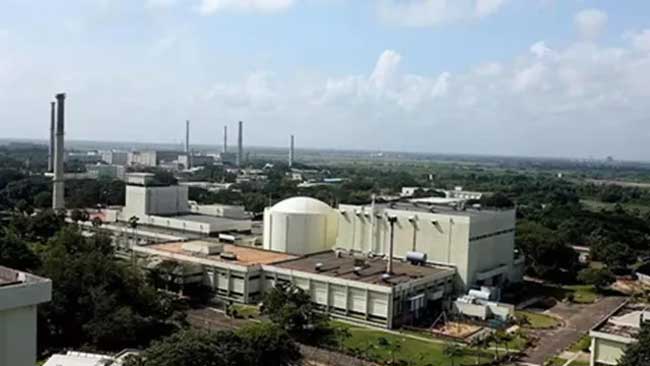
India has marked a historic milestone in clean energy innovation with the commissioning of the world’s first nuclear-based hydrogen production hub. Located at the Indira Gandhi Centre for Atomic Research (IGCAR) in Kalpakkam, this pioneering facility represents a major step forward in redefining the role of nuclear energy beyond conventional electricity generation.
Developed under the Department of Atomic Energy (DAE), the initiative reflects India’s growing ambition to integrate advanced scientific research with sustainable energy solutions. It stands as a powerful symbol of how nuclear science can be harnessed for climate-positive technologies.
At the heart of this breakthrough is the use of heat generated from the Fast Breeder Test Reactor (FBTR), which will drive hydrogen production through the Copper–Chlorine (Cu–Cl) thermochemical cycle. This advanced process enables hydrogen generation without relying on fossil fuels, positioning it as a significant step toward truly zero-carbon energy production.


The project, developed by the Bhabha Atomic Research Centre (BARC), is being hailed as a fully indigenous technological achievement. It demonstrates India’s growing self-reliance in high-end nuclear research and its capability to develop complex, next-generation energy systems within the country.
Officials describe the facility as a technology demonstrator, designed to validate and refine processes that could eventually lead to large-scale hydrogen production. If successfully scaled, it could open a new frontier in India’s clean energy landscape.
Strategically, this development expands the scope of nuclear energy far beyond electricity generation, positioning it as a key enabler of green hydrogen production. This diversification could significantly strengthen India’s long-term energy security and reduce dependence on fossil fuel imports.
Experts believe the initiative will play a crucial role in accelerating India’s transition toward its net-zero emission targets, while also placing the country among the global leaders in hydrogen-based energy innovation.
Ultimately, this breakthrough signals a broader transformation: India is no longer just adapting to the global clean energy transition—it is actively shaping it through indigenous innovation and scientific advancement.