
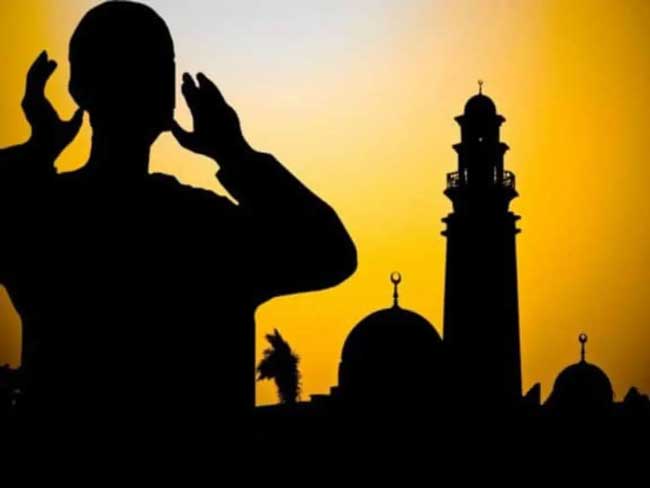
In Denmark, a discussion reportedly under consideration about restricting the public broadcast of the Islamic call to prayer through loudspeakers has once again brought Europe’s long-running tension between religious freedom and cultural regulation into sharp focus. While no final decision has been taken, the very emergence of such a proposal has already ignited a wider debate—one that extends far beyond the question of noise control.
At the centre of the argument lies a familiar European dilemma: how to balance individual religious expression with the norms of public space in increasingly diverse societies. Proponents of restrictions argue that loudspeaker-based religious announcements fall under public order considerations and must comply with local noise regulations that apply uniformly to all faiths and institutions. From this perspective, the issue is not religion itself, but the medium through which it is expressed in shared civic environments.
Yet for many within Denmark’s Muslim community, the concern runs deeper than decibel levels. The Azaan is not merely an announcement; it is a spiritual marker of identity, continuity, and belonging. Any attempt to restrict its public expression is therefore interpreted by some as a symbolic narrowing of space for religious visibility. The fear, as expressed by community voices, is not only regulation but gradual exclusion.


This is where the debate becomes politically charged. Denmark, like several European democracies, finds itself divided between two competing impulses: one rooted in secular uniformity and cultural integration, and the other grounded in pluralism and religious accommodation. Certain political groups frame restrictions as necessary to preserve shared civic norms and prevent what they describe as “over-assertion” of religious identity in public spaces. Others warn that such measures risk undermining the very principle of religious freedom that liberal democracies claim to uphold.
What makes the issue particularly sensitive is its broader symbolic weight. The Azaan controversy is not isolated; it reflects a wider European conversation about immigration, identity, and the visibility of Islam in public life. Across the continent, similar debates have surfaced in different forms—ranging from minaret constructions to dress codes and religious symbols in schools and workplaces. Each instance adds another layer to an already complex negotiation between integration and inclusion.
However, reducing the matter to a binary of “freedom versus restriction” risks oversimplifying a nuanced reality. Public space in democratic societies is governed by negotiation, not absolute claims. The challenge lies in ensuring that regulatory frameworks do not unintentionally translate cultural discomfort into structural exclusion, while also acknowledging legitimate concerns about uniform civic standards.
Ultimately, Denmark’s debate is less about loudspeakers and more about coexistence. It asks a deeper question that Europe continues to grapple with: can a society maintain a shared public order without diluting the diverse identities that now inhabit it?
The answer will likely shape not just policy, but the moral tone of multicultural democracy itself.