
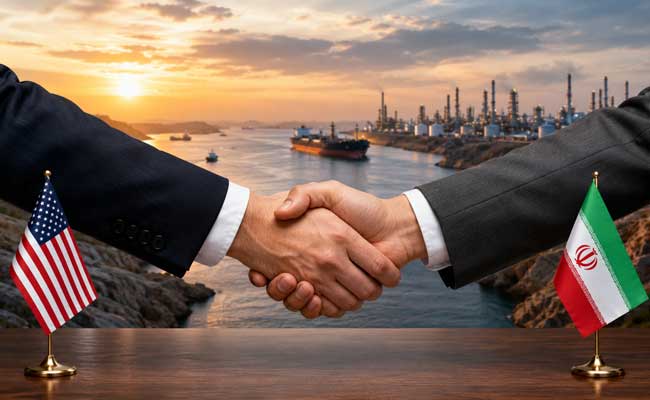
After more than three months of escalating tensions and military confrontation, the United States and Iran appear to be on the verge of signing what many observers describe as a historic diplomatic agreement. The proposed 14-point deal, reportedly set to be finalized in Geneva, seeks to address several of the most contentious issues that have fueled instability in the Middle East and rattled global markets.
At the heart of the agreement lies the future of the Strait of Hormuz, one of the world’s most strategically important maritime chokepoints. The waterway carries a significant portion of global oil exports, and disruptions in the region have repeatedly triggered concerns about energy security and rising fuel prices. Under the reported framework, Iran would remove military restrictions affecting commercial shipping through the strait, while the United States would ease its naval blockade measures around Iranian ports.
The economic dimension of the deal is equally significant. According to reports, Washington has agreed to facilitate the phased release of billions of dollars in Iranian assets that were previously frozen under sanctions. Estimates regarding the total amount vary, but the financial relief could provide a substantial boost to Iran’s economy, which has faced years of pressure from international restrictions.


Despite these breakthroughs, the most sensitive issue remains unresolved: Iran’s nuclear program. Rather than attempting an immediate settlement, both sides have reportedly agreed to continue negotiations over the coming weeks. Future talks are expected to focus on uranium enrichment limits, international inspections, sanctions relief mechanisms, and long-term security guarantees.
Another notable aspect of the development is Pakistan’s claimed role as a mediator. Pakistani Prime Minister Shehbaz Sharif has stated that the final draft of the agreement has been prepared and that both parties are moving toward formal approval. While Islamabad has highlighted its diplomatic contribution, analysts note that the ultimate success of the agreement will depend on implementation rather than negotiation alone.
The proposed deal has also generated debate within Iran. Supporters argue that the agreement offers a practical path toward economic recovery and reduced regional tensions. Critics, particularly among hardline factions, contend that concessions to Washington could weaken Iran’s strategic position and regional influence.
If successfully implemented, the agreement could have consequences far beyond the United States and Iran. A reduction in tensions around the Strait of Hormuz could help stabilize global energy markets, lower risks to international shipping, and improve investor confidence. For a region that has experienced years of conflict and uncertainty, the deal may represent a rare opportunity for diplomatic progress.
Whether the agreement ultimately delivers lasting peace remains uncertain. However, its scope, economic implications, and potential impact on global energy security make it one of the most closely watched diplomatic initiatives in recent years.