

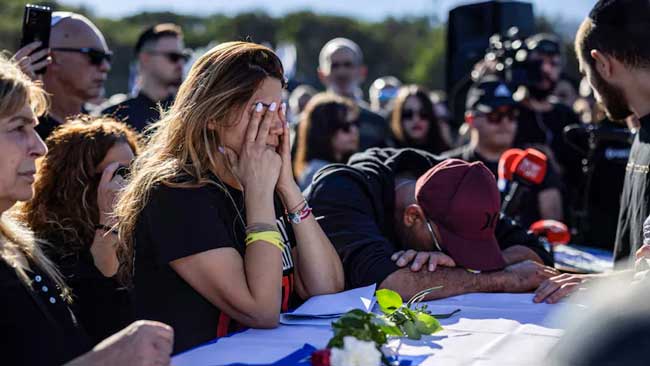
Prolonged conflicts do not merely redraw borders or reshape political equations—they slowly erode the moral core of humanity itself. The ongoing Israel–Hamas conflict has become a stark reminder of this reality, where every new allegation and report deepens the complexity and intensifies global concern.
A recent report has made grave and deeply sensitive allegations concerning the treatment of hostages taken during and after the 7 October 2023 attacks. It claims that individuals held captive were subjected to severe physical and psychological abuse. Beyond physical violence, the report alleges that certain acts were intended to inflict profound mental trauma, not only on the victims but also on their families—turning fear itself into a weapon of war.
According to the report, these findings are based on an extensive investigation involving video footage, photographs, and witness testimonies. If substantiated, such claims would not only point to serious violations of humanitarian law but would also raise fundamental questions about the limits of conduct in modern warfare.


Perhaps the most disturbing aspect of these allegations is the suggestion that psychological suffering may have been deliberately used as a strategic tool. War is not only fought with weapons on the battlefield; it is also waged through fear, perception, and psychological pressure. However, when human suffering itself becomes a method of influence, the moral foundation of conflict begins to collapse.
The situation involving Israel and Hamas has already resulted in immense human cost on all sides. In such a deeply polarized environment, allegations of abuse and violations demand not only careful scrutiny but also impartial and independent investigation.
Human rights organizations have called for such investigations, reflecting a broader global demand for accountability and truth. Yet, beyond institutional responses, what is equally required is the political will to ensure that justice is not overshadowed by narrative warfare or geopolitical interests.
A critical question emerges: in prolonged conflicts, does human suffering gradually lose its urgency in global consciousness? Do statistics begin to replace lived human pain, reducing tragedy to abstract numbers in news cycles?
There is an urgent need for all parties—state and non-state actors alike—to recognize that no political or military objective can justify the erosion of human dignity. International law exists precisely to draw that line, asserting that even in war, there are boundaries that must not be crossed.
Whether every detail of the report stands fully verified or remains under investigation, it raises a larger and unavoidable question: in today’s conflicts, is humanity still protected by the rules it has created, or is it slowly being consumed by the very wars it seeks to regulate?