

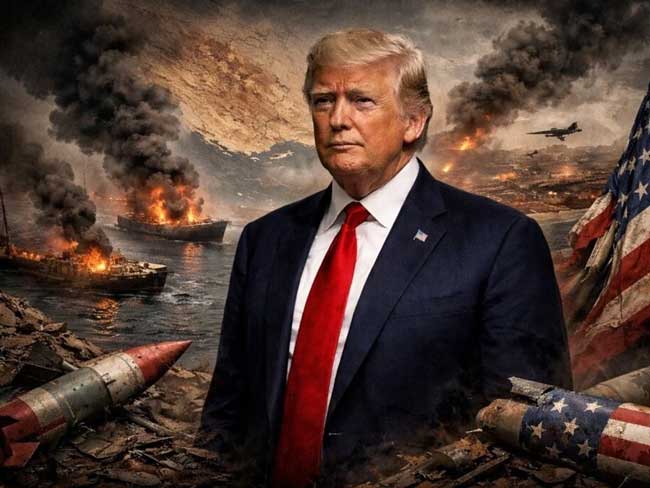
Former U.S. President Donald Trump is facing a significant strategic setback as the ongoing conflict involving Iran has led to an unprecedented depletion of America’s advanced weapons stockpile. Reports suggest that the extensive use of high-end missile systems has put considerable pressure on U.S. defense readiness and supply chains.
According to available information, the United States has reportedly deployed around 1,200 Patriot missile interceptors and nearly 1,000 Tomahawk cruise missiles during the course of the conflict. This heavy usage marks one of the most intense operational consumptions of precision weapons in recent military history.
Billions of Dollars in Military Spending
Tomahawk missiles, known for their long-range precision strike capability, are among the most expensive weapons in the U.S. arsenal, costing millions of dollars per unit. The large-scale deployment of these missiles is estimated to have resulted in expenditures worth billions of dollars.

Defense analysts note that such rapid consumption of advanced weaponry would normally take years to replenish under standard production cycles.
Strain on Air Defense Systems
The Patriot missile system, a key component of U.S. air defense, is designed to intercept incoming missiles and aerial threats. The large-scale use of these interceptors has raised concerns about the remaining operational reserves and long-term readiness of U.S. defensive capabilities.
Military experts warn that this level of depletion could impact the United States’ ability to respond effectively in the event of a larger global conflict.
Pentagon Expresses Concern
Internal assessments within the Pentagon reportedly highlight concerns over the accelerated drawdown of high-tech missile systems. Officials believe that restoring stockpiles of such advanced weaponry could take a significant amount of time due to complex manufacturing processes and supply constraints.
Rising Strategic Challenges
The situation has sparked broader debate about the sustainability of U.S. military engagement strategies. While the immediate use of overwhelming firepower may provide tactical advantages, it also raises questions about long-term strategic balance and preparedness.
Conclusion
The Iran conflict has not only intensified geopolitical tensions but also exposed vulnerabilities in the United States’ defense stockpile management. The heavy reliance on high-cost missile systems underscores a growing challenge for U.S. military planning and future readiness.