

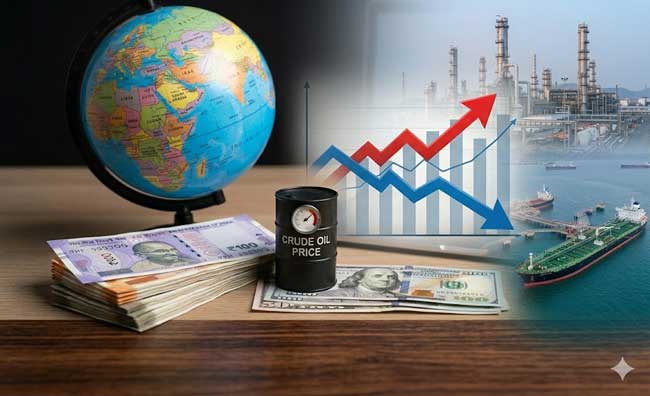
The rising conflict in West Asia is no longer a distant geopolitical spectacle for India. It is slowly entering Indian homes through fuel prices, import bills, pressure on the rupee, and growing concern over foreign exchange reserves. Every missile fired in the Gulf today sends tremors through economies thousands of kilometers away — and for an energy-import dependent nation like India, the warning signs cannot be ignored.
India may still possess strong foreign exchange reserves compared to many vulnerable economies, but history has repeatedly shown that reserves are not merely numbers stored in vaults. They are confidence. They are stability. They are the thin line between economic calm and financial panic.
The concern is not whether India is collapsing. It is not. The concern is whether India is prepared for a prolonged global disruption where oil prices remain elevated, shipping routes become uncertain, and imported inflation begins eating into household savings. Economic crises rarely arrive overnight. They arrive in layers — first as headlines, then as rising prices, and finally as public frustration.


What makes the present situation serious is the dangerous combination of high oil dependency and global uncertainty. India imports the overwhelming majority of its crude oil requirements. Every extra dollar spent on oil widens the pressure on the current account deficit and weakens the rupee further. A weaker rupee then makes imports even more expensive. It becomes a cycle that punishes both governments and ordinary citizens.
This is why the government’s discussions around reducing unnecessary imports, encouraging fuel conservation, and even promoting work-from-home measures should not be mocked as overreaction. They are signs that policymakers understand the scale of the challenge ahead. In moments like these, economic discipline becomes national security.
India must now think beyond temporary firefighting. The real lesson from every global oil crisis is the same: a nation dependent on external energy remains vulnerable to external conflict. This is the time to accelerate renewable energy investments, strengthen domestic manufacturing, reduce luxury imports, and push aggressively toward energy efficiency.
The bigger challenge, however, is psychological. Governments often hesitate to speak honestly about economic risks because they fear panic. But mature nations do not hide reality from citizens. They prepare them. If sacrifices become necessary — whether through reduced consumption, higher costs, or temporary restrictions — people deserve transparency, not comforting slogans.
At the same time, panic narratives must also be resisted. India is not standing on the edge of collapse. Its banking system remains stronger than in many previous global crises, its reserves are still significant, and its economic foundations are more resilient than they were decades ago. But resilience should never become complacency.
The world is entering an era where wars are no longer fought only on borders. They are fought through oil supplies, shipping lanes, currencies, and economic pressure. Nations that fail to prepare early eventually pay the highest price.
This may ultimately become a defining test for India — not merely of economic management, but of national maturity. The question is no longer whether global instability will affect India. It already has. The real question is whether India can transform this warning into an opportunity for long-term economic self-reliance and disciplined growth.