

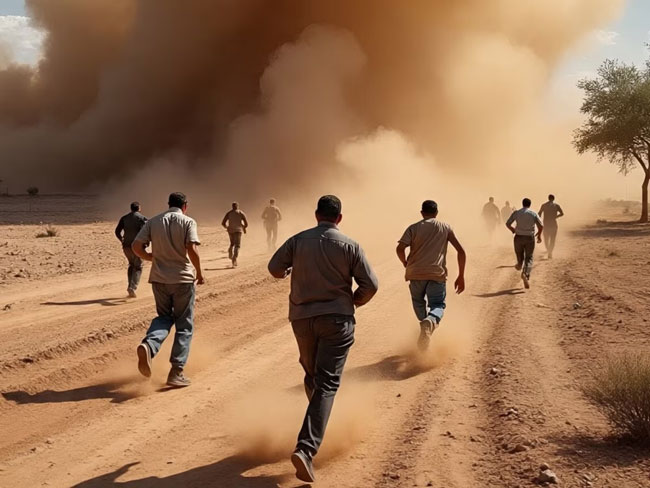
A largely invisible however more and more damaging power is reshaping lives, economies, and ecosystems throughout the globe — sand and dirt storms (SDS). What was as soon as seen as a regional environmental nuisance has now turn into a world disaster, prompting pressing discussions on the United Nations Basic Meeting (UNGA).
In line with the World Meteorological Group (WMO), over 150 international locations are affected by sand and dirt storms, impacting practically 330 million folks. In response to this alarming development, the UN Basic Meeting has not solely introduced an Worldwide Day for Combating Sand and Mud Storms, but in addition designated the last decade from 2025 to 2034 because the United Nations Decade on Sand and Mud Storms — an unprecedented transfer to deal with the issue on a world scale.
2 Billion Tons of Mud Yearly — Equal to 300 Nice Pyramids
WMO consultant Laura Paterson delivered a placing message to the Basic Meeting: every year, the Earth emits over 2 billion tons of mud — a quantity equal to 300 Giza pyramids.


Over 80% of this mud originates from the deserts of North Africa and the Center East, but it surely travels far past, crossing continents and oceans. These particles are carried 1000’s of kilometers by wind currents, polluting skies and ecosystems far faraway from their supply.
Well being Emergency: 7 Million Untimely Deaths Each 12 months
UNGA President Dennis Francis (as quoted in different sources) and WMO consultants emphasised that these storms aren’t only a meteorological occasion — they’re a public well being emergency. Tremendous mud particles, notably PM10 and PM2.5, penetrate deep into the lungs and bloodstream, resulting in a pointy enhance in respiratory sicknesses, cardiovascular illnesses, and untimely deaths.
Estimates counsel that these particles are liable for as much as 7 million untimely deaths yearly worldwide. Weak populations — together with kids, the aged, and people with preexisting situations — are particularly in danger.
Risk to Agriculture and Meals Safety
The storms additionally wreak havoc on agriculture. Mud and sand degrade soil high quality, block daylight, and cut back crop yields by as much as 25%. This in flip results in elevated starvation, displacement, and poverty, notably in already fragile areas.
The storms contribute to land degradation, exacerbate desertification, and pose a direct risk to world meals safety. In lots of areas, farmers are being pressured to desert their lands as agricultural situations turn into unsustainable.
Financial Toll: $150 Billion within the Arab Area Alone
Rola Dashti, Govt Secretary of the UN Financial and Social Fee for Western Asia (ESCWA), revealed staggering financial impacts. Within the Center East and North Africa (MENA) area alone, the annual price of responding to sand and dirt storms is estimated at $150 billion, which is round 2.5% of the area’s complete GDP.
This spring, a sequence of main storms led to hospitals in Iraq being overwhelmed with respiratory sufferers. In Kuwait and Iran, colleges and authorities places of work have been pressured to close down. These storms deliver total cities to a standstill, with widespread disruptions to move, productiveness, and each day life.
What Should Be Finished?
Dashti pressured the pressing must elevate sand and dirt storms on nationwide and world coverage agendas. She advocated for a multifaceted response that features:
- Land restoration – rehabilitating degraded land to forestall additional desertification.
- Sustainable agriculture – selling farming strategies that defend soil and ecosystems.
- Built-in early warning methods – to forecast storms and permit well timed response.
- World cooperation and funding – to implement sensible options at scale.
With out sturdy worldwide cooperation and monetary dedication, efforts to regulate this disaster might stay inadequate.
The Manner Ahead: No Longer an Invisible Disaster
Sand and dirt storms might not make headlines each day, however their influence is felt throughout the globe — from stunted crops and soiled skies to clogged lungs and collapsing economies. The UN’s daring transfer to dedicate a whole decade to this situation displays its rising seriousness.
Because the world grapples with local weather change, land degradation, and unsustainable improvement practices, sand and dirt storms stand on the crossroads of all three. Addressing them is not nearly saving the surroundings — it is about defending lives, securing meals methods, and stabilizing economies.
The grains of sand blowing throughout deserts are now not silent — they’re carrying with them the cries of ecosystems, the wheeze of the unwell, and the warning of collapse. This isn’t only a storm within the wind — it is a storm in our future. The world should pay attention. The world should act.