
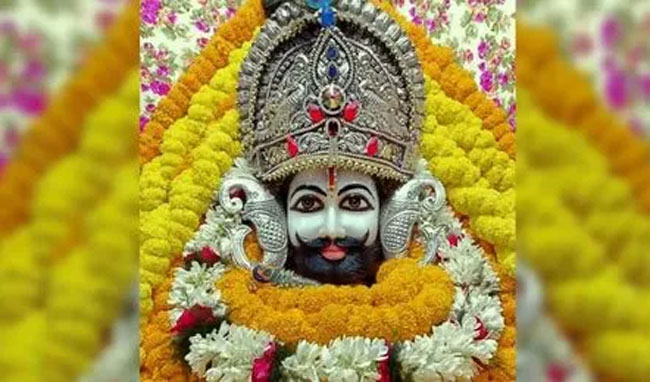
 Rangbhari Ekadashi, observed on the eleventh day (Ekadashi) of the bright fortnight of the month of Phalguna, holds profound spiritual significance for devotees of Khatu Shyam. On this sacred day, thousands of devotees travel to the revered Khatu Shyam Temple in Rajasthan’s Sikar district. The festival marks the ceremonial beginning of Holi in Khatu Dham, where devotion blends beautifully with celebration.
On Rangbhari Ekadashi, Baba Shyam is adorned in a magnificent floral decoration, and the temple resonates with devotional hymns and grand kirtans. Devotees offer gulal (colored powder) for the first time in the season, initiating the Phag Utsav (Holi festivities). The atmosphere becomes spiritually vibrant as countless worshippers immerse themselves in what is lovingly called the “Shyam Rang” — the divine color of surrender and devotion.
The Legend of Barbarika: Power, Promise, and Supreme Sacrifice


Khatu Shyam is believed to be the divine manifestation of Barbarika, the mighty grandson of Bhima and son of Ghatotkacha from the Mahabharata. His story, described in the Skanda Purana, reflects unparalleled valor combined with ultimate self-sacrifice.
Before the great war of Kurukshetra began, warriors on both sides discussed how long it would take to defeat the opposing army. Barbarika confidently declared that he could annihilate the entire battlefield within moments. He possessed divine weapons granted by Goddess Siddhambika — an invincible bow and infallible arrows.
To demonstrate his power, he released a mystical arrow filled with sacred ash. The ash settled precisely upon the vital points of those warriors destined to die in battle. Only the five Pandavas, Kripacharya, and Ashwatthama remained untouched. The assembly stood astonished at his divine capability.
However, Barbarika had taken a solemn vow: he would always support the weaker side in any battle. Lord Krishna understood that if Barbarika participated in the war, he would continuously switch sides, ultimately leading to total destruction and upsetting the cosmic balance.
To uphold Dharma, Krishna asked Barbarika for his head in charity (daan). Without hesitation, the young warrior offered his head. Krishna severed it with the Sudarshan Chakra, but by divine grace, the head was made immortal and placed atop a hill so that Barbarika could witness the entire eighteen-day war of Kurukshetra.
It is this immortal head that is worshipped today as Khatu Shyam.
The Spiritual Meaning of “Shyam Rang”
The colors offered on Rangbhari Ekadashi are not merely festive powders; they symbolize the remembrance of supreme sacrifice. “Shyam Rang” represents surrender of ego, faith in divine will, and unwavering devotion.
Barbarika’s life teaches that true heroism lies not in demonstrating power but in surrendering it for the greater good. His sacrifice stands as a timeless message that Dharma prevails not through strength alone, but through humility and devotion.
Khatu Dham: A Living Center of Faith
During Rangbhari Ekadashi, Khatu Dham becomes a radiant center of spiritual energy. Devotees sing bhajans late into the night, seeking blessings from Baba Shyam, who is lovingly called “Haare Ka Sahara” — the support of the defeated and the distressed.
It is believed that sincere prayer offered at Khatu Dham brings relief from hardships and restores hope to weary hearts.
Conclusion
Rangbhari Ekadashi is not merely a festival marking the arrival of Holi; it is a sacred remembrance of sacrifice, righteousness, and divine grace. It reminds humanity that in the battlefield of life, true victory belongs to those who choose Dharma over pride, surrender over ego, and devotion over dominance.
When millions chant the name of Shyam in unison, it becomes more than a celebration — it becomes a spiritual awakening, coloring lives with faith, humility, and eternal hope.