

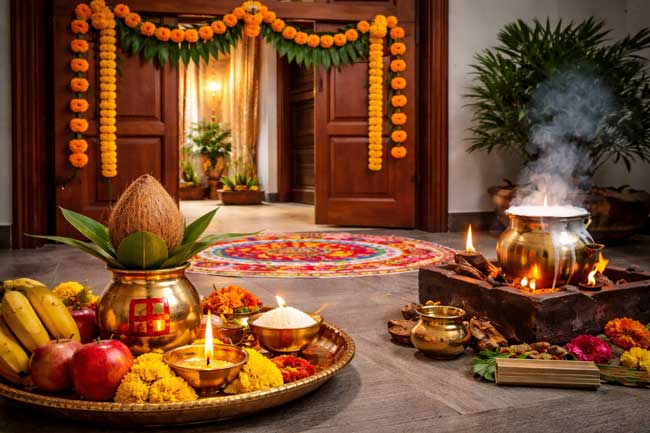
 A new house is not merely a structure made of bricks and walls; it represents a new beginning, fresh hopes, and the promise of a better future. Moving into a new home is considered one of the most significant milestones in a person’s life. In Indian tradition, the ceremony of Griha Pravesh holds great importance because it symbolizes inviting prosperity, harmony, and positive energy into the household.
According to Vastu Shastra, certain traditional practices performed during the housewarming ceremony help create a positive environment and ensure peace, happiness, and prosperity for the family. When these customs are followed with faith and devotion, the new home is believed to become a place of comfort, stability, and growth.
One of the first things that should be taken care of before entering the new house is the decoration and cleanliness of the main entrance. In Vastu, the main door is considered the gateway for energy to enter the house. Decorating it with rangoli, sacred symbols, and traditional torans made of mango or Ashoka leaves is believed to welcome auspicious energy and bring good fortune to the home.


Offering prayers before beginning life in the new house is another important ritual. Worshipping Lord Ganesha and Goddess Lakshmi is especially significant during Griha Pravesh. Lord Ganesha is believed to remove obstacles, while Goddess Lakshmi represents wealth and prosperity. Their blessings are sought so that the household remains filled with happiness and abundance.
Boiling milk in the kitchen after entering the new home is also considered a very auspicious practice. Allowing the milk to overflow symbolizes prosperity and abundance. It reflects the belief that the home will always remain filled with food, wealth, and good fortune.
Lighting a lamp or diya made of ghee is another traditional practice followed during the ceremony. The light of the lamp represents positivity, knowledge, and spiritual purity. It is believed that lighting a sacred lamp in the new house dispels negativity and fills the space with divine energy.
The sound of a conch shell, bells, or the chanting of sacred mantras during the ceremony is also regarded as beneficial. Such sounds create a spiritual atmosphere and help purify the surroundings. For this reason, many families perform a havan or Vedic rituals during the housewarming ceremony to enhance the flow of positive energy.
Cleanliness and proper organization of the home are also emphasized in Vastu Shastra. A clean and well-arranged house attracts positivity and harmony. It is believed that when a home remains pure and balanced, peace and prosperity naturally follow.
Sharing prasad or a meal with family members and guests is also considered a meaningful tradition during Griha Pravesh. It reflects the spirit of togetherness, gratitude, and joy. When a new home begins its journey with happiness, blessings, and the warmth of loved ones, it truly transforms into a place filled with love and positive energy.
These traditional practices associated with Griha Pravesh are not merely rituals but symbolize the intention to start a new chapter of life with positivity and spiritual harmony. When a family enters their new home with faith, gratitude, and auspicious customs, it is believed that the path ahead becomes brighter and more prosperous.