

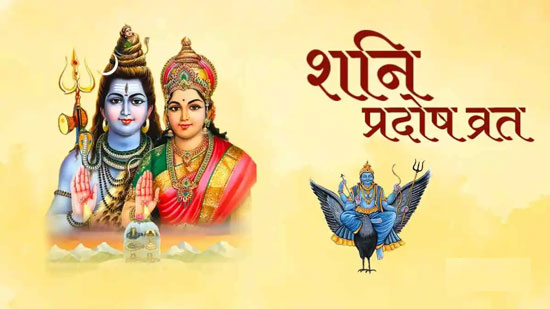
 Between day and night lies a subtle, sacred pause — a fleeting interval when the sun bows toward the horizon and the sky is painted in hues of amber and ash. In the spiritual tradition of India, this transitional moment is not merely a change of light; it is a doorway. When this twilight coincides with the Trayodashi tithi (the thirteenth lunar day), it becomes known as Pradosh — and the observance undertaken at this time is called Pradosh Vrat.
This is not simply a ritual fast. It is a mystical convergence — a moment when the individual soul finds itself closest to the Supreme. As described in the Shiva Purana, during the Pradosh period the celestial beings assemble upon Mount Kailasa to worship Lord Shiva. It is said that at this sacred hour, Shiva becomes especially benevolent, granting grace and blessings to devoted seekers.
The Mystery of Twilight: Why Is Shiva Closest Then?
The word Pradosh literally means “the removal of defects” or “the dissolution of negativity.” Twilight itself symbolizes transition — from activity to stillness, from noise to silence, from outward engagement to inward awareness.


Lord Shiva is the deity of transformation — the One who dissolves and recreates, who governs the rhythm of destruction and renewal. Twilight, being a moment of cosmic transition, resonates with Shiva’s own nature. It is neither day nor night; it is both and beyond. In that liminal space, the restless mind naturally quiets, and the presence of the Divine becomes perceptible.
Perhaps Shiva is always near — but in Pradosh, we become capable of sensing that nearness.
The Vrat: From Fasting to Inner Alignment
Pradosh Vrat is often observed through fasting from sunrise until the evening worship. Yet the essence of the vrat is not merely abstaining from food; it is disciplining the senses and refining intention.
During the Pradosh hour, devotees perform abhishekam (ritual bathing) of the Shiva Lingam, light lamps, offer bilva leaves, and chant “Om Namah Shivaya.” These outward acts mirror an inner cleansing. Just as water flows over the Lingam, the practitioner allows awareness to wash over the mind’s impurities.
Scriptural traditions describe Shiva performing the cosmic Tandava during this hour — a dance that symbolizes the eternal balance of creation and dissolution. Joy and sorrow, gain and loss, birth and death — all move in rhythm within that divine dance.
Pradosh as a Discipline of Self-Reflection
Human life is marked by imperfections — in thought, in speech, in conduct. Pradosh Vrat offers a sacred pause for introspection. It invites us to ask: Where has ego overshadowed humility? Where has anger clouded clarity? What inner “defects” require surrender?
Standing before Shiva in silent prayer, the devotee does not merely seek blessings; he seeks purification. The acknowledgment of one’s limitations becomes the first step toward transcendence.
Thus, Pradosh is not about fear of sin, but about the courage to confront and release it.
Different Forms: Som, Bhaum, and Shani Pradosh
When Pradosh falls on a Monday, it is called Som Pradosh, associated with emotional peace and mental balance. Tuesday’s observance, Bhaum Pradosh, is linked to strength and the resolution of material challenges. Shani Pradosh, occurring on Saturday, is believed to aid in relief from karmic burdens.
Yet beyond variations of day and planetary influence, the deeper essence remains unchanged: each Pradosh is an opportunity for inner recalibration.
Conclusion: Experiencing Divine Nearness
Is Shiva truly closer during Pradosh? Or does the stillness of that hour make us more receptive?
Perhaps both are true.
When the world softens into twilight and the mind turns inward, the Divine no longer feels distant. Pradosh Vrat teaches that God is not remote — He is revealed in moments of awareness, humility, and surrender.
The twilight lasts only a short while. But the awakening it offers can illuminate a lifetime.
In that sacred pause between light and darkness, Shiva is not merely worshipped — He is experienced.