

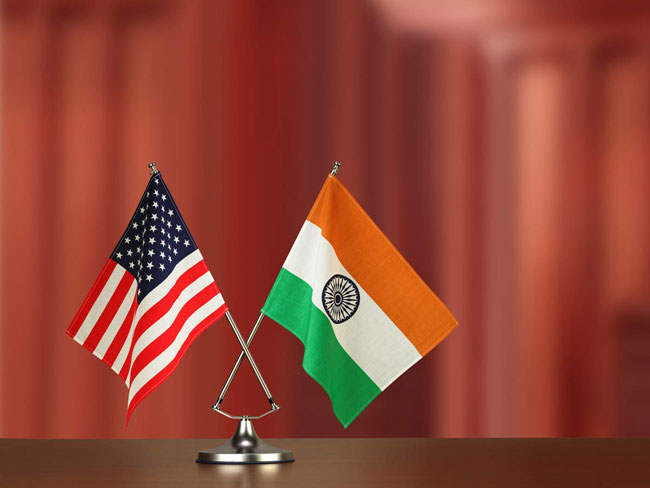
India and the United States on Saturday formally announced that they have reached an agreement on the framework of an Interim Trade Deal, marking a major breakthrough in bilateral economic relations. Under the agreement, the US will reduce tariffs on Indian goods from 50 percent to 18 percent.
According to the joint statement, the framework reflects the commitment of both countries to the broader India–US Bilateral Trade Agreement, negotiations for which were initiated on February 13, 2025, following discussions between US President Donald J. Trump and Indian Prime Minister Narendra Modi.
The statement said the interim agreement will expand market access, strengthen supply chains, and serve as a milestone in the India–US strategic and economic partnership. Both sides emphasized their shared commitment to a balanced, reciprocal, and results-oriented trade relationship.


Key Terms of the Agreement
As part of the deal, India will eliminate or reduce tariffs on a wide range of US industrial goods and agricultural and food products. Meanwhile, the US will impose a reciprocal tariff of 18 percent on selected Indian exports.
Products from India subject to the 18 percent tariff include textiles and apparel, leather and footwear, plastics and rubber products, organic chemicals, home décor items, handicrafts, and certain categories of machinery.
Both countries agreed to immediately implement the framework and continue working toward finalizing the interim deal in line with the agreed structure, eventually leading to a comprehensive bilateral trade agreement.
10 Key Highlights from the Joint Statement
1. India to Cut Tariffs on US Goods
India has agreed to reduce or eliminate duties on several US agricultural and food products, including sorghum, dried distillers grains, fresh and processed fruits, nuts, soybean oil, and alcoholic beverages.
2. 18% Reciprocal Tariff by the US
Under US Executive Order 14257, a reciprocal tariff of 18 percent will apply to Indian exports such as clothing, leather goods, footwear, plastics, rubber products, organic chemicals, decorative items, handicrafts, and machinery.
3. Zero Tariff on Select Indian Products
The US will completely remove tariffs on certain Indian exports, including gems and diamonds, aircraft parts, and generic pharmaceutical products.
4. Rollback of Security-Related Tariffs
The US will withdraw security tariffs imposed on imports of steel, aluminium, and copper used in aircraft and related components.
5. National Security Tariff Exemptions
India will receive tariff-rate exemptions on specific automotive parts under US national security tariffs. Further discussions on pharmaceuticals will follow after the completion of Section 232 investigations.
6. Enhanced Market Access for Both Sides
Both countries have agreed to ensure improved and mutually beneficial access to each other’s markets.
7. Removal of Non-Tariff Barriers
India and the US will work to eliminate non-tariff barriers affecting trade, including issues related to ICT licensing and alignment with US product standards.
8. Flexibility on Future Tariff Adjustments
The agreement allows both sides the flexibility to adjust tariffs in response to changes made by the other party.
9. Economic Security and Technology Cooperation
Both nations will coordinate on supply-chain resilience, investment screening, export controls, and responses to third-country trade practices. Cooperation will expand in advanced technologies, including GPUs and data-center hardware.
10. India to Purchase $500 Billion Worth of US Goods
Over the next five years, India will purchase approximately $500 billion worth of US products, including energy resources, aircraft and aircraft parts, precious metals, advanced technology products, and coking coal. Both sides will also work toward establishing mutually beneficial digital trade rules.