
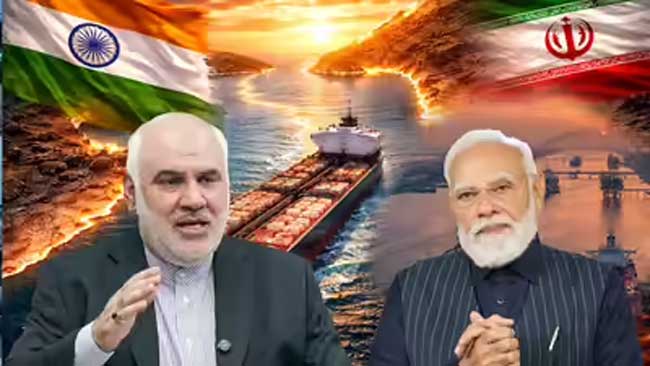
At a time when rising tensions in West Asia have raised fears of a global energy disruption, India has received a significant and reassuring development. Iran has allowed two Indian vessels to safely pass through the strategically crucial Strait of Hormuz—a move that highlights India’s strong diplomatic engagement in a volatile region.
India’s External Affairs Minister, Subrahmanyam Jaishankar, made it clear that the permission granted by Iran was not the result of any deal or exchange. Instead, he emphasized that it reflects the strength of India’s balanced diplomacy and its long-standing relations with countries across the region.
The development comes amid escalating tensions involving Iran, United States, and Israel, which had prompted Iran to tighten monitoring and restrict movements through the critical maritime corridor. These measures had triggered concerns about disruptions to global oil supply chains and rising energy prices.


In such a tense environment, the safe passage granted to Indian ships is being seen as a positive signal—not only for India but also for global maritime stability.
Dialogue Delivering Results
Speaking about the situation, Jaishankar said India has been actively engaging with multiple countries and stakeholders to ensure stability and safeguard national interests. According to him, the ongoing diplomatic outreach is already producing encouraging outcomes.
“This process is still underway. When dialogue begins to deliver positive results, it naturally strengthens the resolve to continue those conversations,” he said.
Jaishankar reiterated that India firmly believes that even the most complex international tensions can be addressed through constructive dialogue, cooperation, and mutual respect.
Strong India–Iran Relations at Work
Highlighting the broader context, the minister pointed out that India and Iran share decades of economic, cultural, and diplomatic engagement. These established ties, he said, helped facilitate communication during a challenging moment.
“This is not a matter of bargaining or exchange. India and Iran have a relationship, and we view the present tensions in the region as unfortunate,” Jaishankar stated.
He also noted that the passage of the two vessels is just the beginning. Several other Indian ships are currently operating in the region, and India will continue its diplomatic efforts to ensure their safe movement.
Wider Diplomatic Outreach
As part of India’s broader diplomatic engagement in West Asia, Jaishankar also held discussions with the foreign ministers of United Arab Emirates and Saudi Arabia.
He spoke with UAE Foreign Minister Abdullah bin Zayed Al Nahyan and Saudi Foreign Minister Faisal bin Farhan Al Saud to review the evolving situation in the region.
Experts believe that ensuring the stability of energy supply routes and protecting maritime trade were key topics during these conversations. India’s active diplomacy reflects its growing role as a responsible and influential global stakeholder.
Why the Strait of Hormuz Matters
The Strait of Hormuz is widely regarded as one of the most important energy corridors in the world. It connects the Persian Gulf with the Arabian Sea and serves as a vital channel for global oil and gas shipments.
Nearly 20 percent of the world’s oil and gas trade passes through this narrow route. For India, the stakes are even higher—about 60 percent of the country’s crude oil imports travel through this corridor.
Major energy exporters such as Saudi Arabia, Iraq, Kuwait, United Arab Emirates, and Qatar rely heavily on the route to transport their supplies to global markets.
Any disruption in this passage can send shockwaves across international energy markets. In this context, Iran’s decision to allow Indian ships to pass through the strait provides a crucial sense of reassurance.
A Diplomatic Success for India
The episode underscores the growing effectiveness of India’s foreign policy and its ability to maintain constructive relations across competing geopolitical blocs. At a time when many nations are struggling to navigate the complexities of West Asian tensions, India’s steady diplomatic engagement is helping safeguard its strategic and economic interests.
The safe passage of Indian vessels through one of the world’s most sensitive maritime chokepoints not only ensures the continuity of trade but also reflects the credibility and respect India commands on the global stage.