

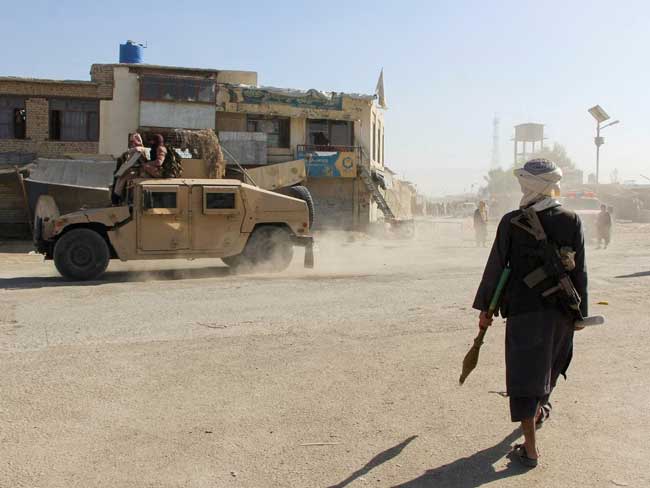
Desk: The escalating border dispute between Afghanistan and Pakistan has now taken the shape of a serious military confrontation. According to claims made by Taliban-controlled Afghan authorities, Afghan forces have launched a large-scale retaliatory military operation against Pakistan. A Taliban spokesperson stated that 55 Pakistani soldiers have been killed and 19 military posts destroyed. However, these claims have not been independently verified.
The operation is said to be in response to recent Pakistani airstrikes inside Afghan territory. Kabul has accused Islamabad of targeting civilian areas, including religious schools and residential homes, resulting in casualties among women and children. Following the strikes, the Afghan Defense Ministry reportedly adopted a “tit-for-tat” strategy, initiating heavy shelling and ground assaults along the border.
The two sides have exchanged intense artillery fire and air attacks along the 2,611-kilometer Durand Line, the disputed border between the two countries. A ceasefire reportedly mediated by Qatar appears to be collapsing. Tensions sharply escalated on Friday when Pakistan conducted airstrikes on major Afghan cities, prompting Afghan forces to retaliate by targeting Pakistani border positions.

Sequence of Events
Sunday:
Pakistan carried out airstrikes in Afghan border areas, claiming that 70 militants were killed. Afghan authorities, however, alleged that the strikes hit madrasas and civilian homes, causing civilian casualties.
Thursday Night:
Afghan forces launched cross-border retaliatory strikes inside Pakistan. Taliban spokesperson Zabihullah Mujahid stated that large-scale counter-operations were conducted in six provinces in response to what he described as Pakistani military provocations.
Early Friday:
Pakistan carried out airstrikes in Kabul, Kandahar, and the southeastern province of Paktia. At least three explosions were reportedly heard in Kabul.
Friday (Later Developments):
Following the airstrikes, Afghan forces intensified attacks toward Pakistani positions in the direction of Kandahar and Helmand. Mujahid announced on social media platform X that large-scale retaliatory operations had resumed after the strikes on Kabul, Kandahar, and other provinces.
Situation at Torkham Border
The most severe impact of the fighting has been reported in the Torkham border region. According to the Afghan Defense Ministry, a missile strike near a refugee camp injured 13 civilians, including women and children. Authorities are evacuating the camp as a precautionary measure.
On the Pakistani side, local police stated that mortars fired from Afghan territory landed in nearby villages, though no civilian casualties were reported. Afghan refugees waiting to cross the border, along with local residents, are being moved to safer areas.
Durand Line and TTP Issue
The 2,611-kilometer boundary between Afghanistan and Pakistan is known as the Durand Line. Afghanistan has historically refused to formally recognize it as an international border, contributing to recurring tensions.
Pakistan has blamed the recent surge in militant attacks within its territory on the Tehrik-i-Taliban Pakistan (TTP) and Baloch separatist groups. Islamabad alleges that the TTP operates from Afghan soil, an accusation that Kabul has consistently denied.
International Reaction
Amid rising tensions, United Nations Secretary-General António Guterres has urged both sides to exercise restraint and ensure the protection of civilians in accordance with international law. He emphasized that disputes should be resolved through diplomatic channels to prevent further regional instability.