

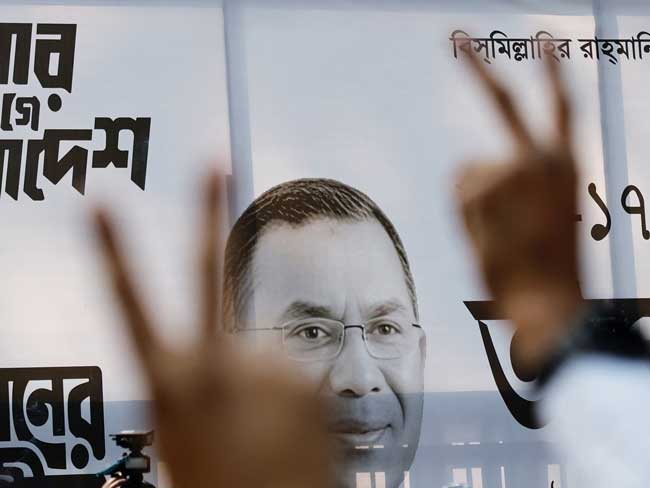
February 12, 2026, will be remembered as a defining moment in the political history of Bangladesh. In the general elections held that day, the alliance led by the Bangladesh Nationalist Party (BNP) secured a sweeping victory, winning 210 out of 297 seats. With this decisive mandate, Tarique Rahman is set to become the country’s first male Prime Minister in nearly 35 years.
However, this election was not merely about transferring power from one political leadership to another. It was, in essence, a national referendum on restructuring the country’s system of governance.
A Clear Public Mandate
According to official data released by the Election Commission, voter turnout stood at 60.26 percent. Of those who voted, nearly 70 percent supported a shift toward a parliamentary system similar to India’s model. The comprehensive reform package known as the “July Charter 2025” received 48,074,429 votes in favor, compared to 22,565,627 against it—an overwhelming endorsement of systemic reform.


Senior Secretary Akhtar Ahmed described the result as a clear public seal of approval for national reconstruction.
What Is the “July Charter 2025”?
The July Charter was drafted in the aftermath of a student-led uprising in August 2024 that led to the removal of Prime Minister Sheikh Hasina from power. The movement brought national attention to concerns over centralized authority, weakened institutions, and the erosion of democratic checks and balances.
The Charter’s primary objective is to prevent excessive concentration of power and to restructure key state institutions to ensure that authoritarian tendencies do not re-emerge in the future. It outlines 84 reform points, which are to be implemented within 270 working days by a Constitutional Reform Council.
Key Proposals of the July Charter
1. Term Limits for the Prime Minister
Strict limits on the Prime Minister’s tenure to prevent prolonged concentration of executive power.
2. Introduction of a Bicameral Parliament
Creation of a 100-seat upper house, with seats allocated based on national vote share to ensure broader representation. This structure draws inspiration from India’s bicameral parliamentary system, which includes the Lok Sabha (lower house) and the Rajya Sabha (upper house).
3. Reduction of Executive Concentration
Rebalancing executive authority by reducing the powers of the Prime Minister’s Office and strengthening the constitutional role of the President.
4. Judicial and Institutional Independence
Structural safeguards to ensure that the judiciary and key state institutions operate free from political interference.
5. Institutional Role for the Opposition
Guaranteeing opposition participation in leadership roles within major parliamentary committees and in positions such as Deputy Speaker.
6. Protection for “July Fighters”
Legal and administrative protection for participants of the uprising, referred to as “July Fighters.”
7. Increased Representation of Women
Measures to expand women’s participation in Parliament and public life.
From Mandate to Implementation
This is the third time in Bangladesh’s history that a reform charter of such scale has been proposed. The true challenge now lies not in electoral victory, but in execution.
The new BNP-led government must translate this historic mandate into concrete constitutional and institutional reforms. After years marked by political polarization and institutional instability, the country stands at a crossroads.
If successfully implemented, the July Charter 2025 could redefine Bangladesh’s democratic architecture—transforming February 12, 2026, from a date of political transition into the beginning of a new democratic era.