
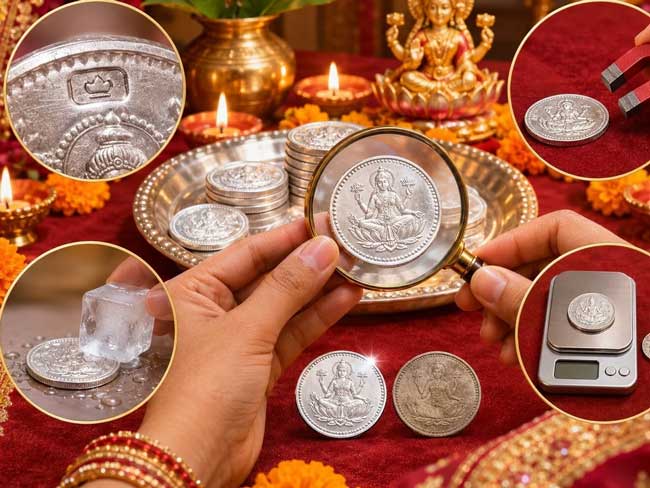
Buying gold and silver is considered especially auspicious during the festive season. During occasions like Dhanteras and Diwali, many people prefer purchasing silver coins, utensils and jewellery. While some buy silver for religious and traditional reasons, others consider it a valuable investment. However, the possibility of adulterated or counterfeit silver products in the market makes it important for buyers to be cautious.
There are a few simple ways to conduct a preliminary check of silver at home. According to experts, factors such as ice, magnets, sound and purity markings can offer useful clues about the authenticity of silver. However, these methods are not completely reliable, and professional testing is necessary to confirm its purity.
1. Use Ice to Check Silver Authenticity
Silver is an excellent conductor of heat. One simple way to conduct a preliminary test is to place a small piece of ice on a silver coin. If the ice melts quickly, it could indicate the metal’s high thermal conductivity.

However, this test alone cannot establish whether the silver is genuine or pure.
2. Test Silver Using a Magnet
Silver is a non-magnetic metal. You can bring a strong magnet close to a silver coin to conduct a basic check.
If the coin is attracted to the magnet, it may contain iron or another magnetic metal. However, the absence of magnetic attraction does not guarantee that the product is made of pure silver, as several other metals are also non-magnetic.
3. Pay Attention to the Sound of the Coin
The sound produced by a silver coin can also provide an indication of its authenticity. When gently tapped, a genuine silver coin may produce a clear, ringing sound that lasts for a short time.
In comparison, coins made from certain other metals may produce a duller sound. However, the sound can also vary depending on the coin’s size, thickness and design.
4. Understand Silver Purity Marks: 925 and 999
Before purchasing silver, always check the purity markings stamped on the product.
- 925 Silver: Contains 92.5% pure silver and 7.5% other metals.
- 999 Silver: Contains 99.9% pure silver and is considered fine silver.
Buyers should also ask the seller for a purity certificate and insist on a proper purchase bill. Remember that a stamped purity mark alone should not be treated as conclusive proof of authenticity.
Get Silver Professionally Tested Before Making an Expensive Purchase
Home-based methods can help identify possible signs of genuine silver, but they cannot confirm its exact purity. Therefore, before investing in expensive silver coins, utensils or jewellery, it is important to purchase from a trusted jeweller.
If required, buyers can also get the product tested at an authorised or recognised testing centre to establish its purity.
During festive shopping, consumers should look beyond attractive prices and pay equal attention to the quality and purity of silver. Always ask for a proper bill and supporting purity documentation. These simple precautions can help protect buyers from fraud and potential financial losses.