
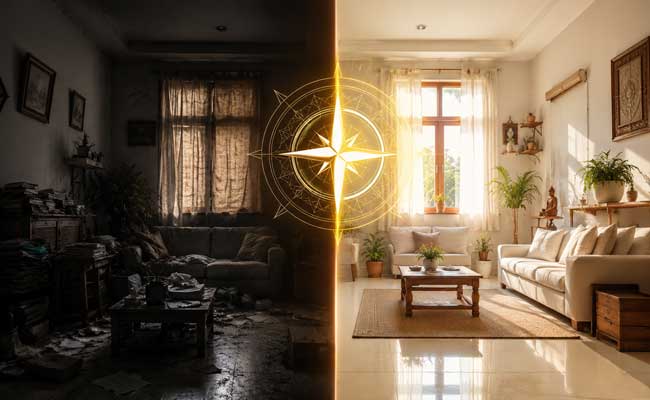
Sometimes in life, everything appears normal on the surface, yet a strange sense of restlessness quietly lingers  within the home. Sleep feels incomplete, peace seems missing, and even without clear reasons, the mind remains unsettled. Small issues begin to feel larger, and a subtle tension starts building within the family environment. In such moments, a question naturally arises—Is this only a psychological state, or could the energy of the home also be playing a role?
In the tradition of Vastu Shastra, a home is not viewed merely as a physical structure of walls and rooms. It is considered a living energy field. When this energy is balanced, the mind feels calm and life flows smoothly. When it becomes disturbed, feelings of anxiety, confusion, and emotional restlessness may gradually increase.
The Invisible Influence of Energy
Every part of a home is believed to carry symbolic and energetic significance. When the natural balance of directions and spaces is disturbed, it may subtly influence the mood and behavior of the people living inside. For example, restricted airflow, poor lighting, or stagnant spaces can create a heavy and dull atmosphere. Over time, such an environment may contribute to mental fatigue and emotional imbalance.


Similarly, clutter is not just physical disorder. It is often seen as a reflection of inner confusion. A disorganized space can quietly encourage scattered thoughts and a lack of clarity in decision-making.
Signs That May Indicate Imbalance
When Vastu imbalance is present, certain patterns may gradually appear. These can include unexplained tiredness, irritability, lack of focus, reduced communication among family members, or a general sense of disconnection from daily life. Because these changes are subtle, they are often ignored or attributed only to stress or routine pressure.
However, when such patterns persist, it becomes important to reflect on whether the living environment is contributing to this inner disturbance.
The Importance of the North-East Direction
In Vastu tradition, the north-east direction is considered highly sensitive and spiritually significant. It is associated with clarity of mind, calmness, and inner balance. When this area is blocked, cluttered, or burdened with heavy objects, it is believed that mental pressure and confusion may increase.
Similarly, the condition of the main entrance is also considered important. A dark, obstructed, or neglected entrance is often associated with reduced positive flow and opportunities within the home.
The Solution Is Not Only External
While understanding spatial balance is helpful, external corrections alone may not bring complete transformation. The energy of a home and the state of the mind are deeply interconnected. Without addressing inner stress and emotional imbalance, external arrangements may have limited effect.
True harmony comes when both the environment and the mind are given attention. Cleanliness, natural light, open space, and order in the home can support peace, but clarity of thought and emotional stability are equally important.
Concluding Perspective
A home is not just a place to live; it is a silent force that shapes daily life. When its balance is disturbed, its effects slowly reflect in emotions, relationships, and overall well-being. Therefore, it becomes essential to understand not only the physical structure of the home but also the subtle energy that flows through it.