
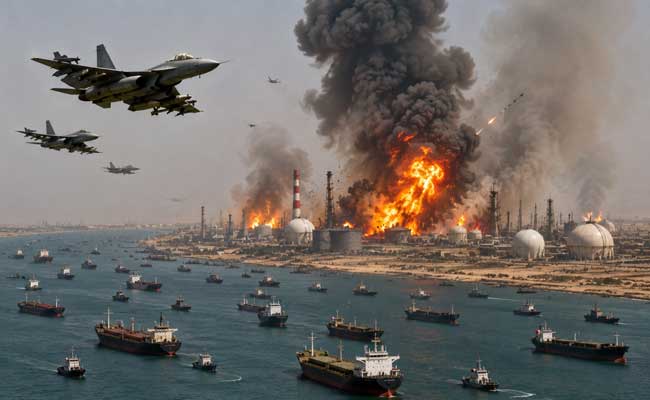
Desk : Tensions between the United States and Iran escalated sharply after U.S. President Donald Trump accused Tehran of violating the ceasefire by carrying out a drone attack on a commercial cargo vessel near the Strait of Hormuz. In response, the United States launched airstrikes on multiple Iranian military targets.
According to U.S. officials, the strikes targeted Iranian missile storage facilities, drone infrastructure, and coastal radar installations. Trump described Iran’s actions as a “blatant violation” of the ceasefire and said the United States would take all necessary measures to protect its forces and ensure the safety of international shipping.
Iran strongly condemned the American strikes and claimed it had responded to what it called an act of aggression. Both sides have accused each other of breaching the ceasefire, raising fears that the fragile truce could collapse and trigger a wider regional conflict.


The renewed hostilities have also disrupted maritime traffic through the Strait of Hormuz, one of the world’s busiest oil transit routes. Reports indicate that nearly 500 commercial vessels have been delayed or stranded due to heightened security concerns, increasing the risk of disruptions to global energy supplies and international trade.
Analysts warn that any prolonged escalation between Washington and Tehran could have far-reaching consequences for global oil prices, shipping routes, and financial markets. The international community has urged both countries to exercise restraint and return to diplomatic negotiations to prevent further instability in the region.