
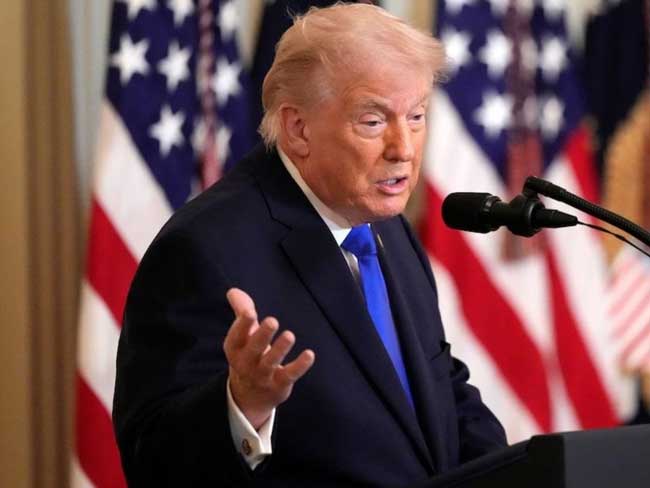
Washington: United States President Donald Trump on Monday announced that a peace agreement between the United States and Iran had been finalized, paving the way for the reopening of the strategically significant Strait of Hormuz and the lifting of the US naval blockade in the region.
In a statement posted on Truth Social, Trump declared that the agreement with Iran was complete and authorized the immediate reopening of the Strait of Hormuz without restrictions. He also announced the withdrawal of the US naval blockade, a move expected to restore the uninterrupted flow of global oil supplies through one of the world’s most critical maritime trade routes.
The announcement comes amid intensified diplomatic efforts aimed at reducing tensions across West Asia. Pakistan Prime Minister Shehbaz Sharif also confirmed that a peace agreement had been reached following extensive negotiations involving multiple regional stakeholders.

According to Sharif, both Washington and Tehran have agreed to the immediate and permanent cessation of military operations on all fronts, including in Lebanon. He stated that the formal signing ceremony for the agreement is scheduled to take place in Switzerland on June 19.
In a statement shared on social media platform X, Sharif welcomed the breakthrough and expressed appreciation to all parties involved in the mediation process. He particularly thanked Qatar, Saudi Arabia, and Türkiye for their contributions toward facilitating dialogue and supporting diplomatic efforts.
Sharif further noted that mediators would oversee a series of meetings in the coming days to prepare for the implementation phase of the agreement. These discussions are expected to address technical aspects and establish the framework for the formal signing ceremony.
The development follows comments made by President Trump on Sunday, when he indicated that negotiations remained on track despite renewed tensions triggered by Israeli military strikes in Beirut and subsequent threats of retaliation from Iran.
Speaking to Axios, Trump acknowledged that the escalation in Lebanon had briefly delayed the signing process. He expressed frustration over the timing of the Israeli operation, suggesting that it had complicated ongoing diplomatic efforts between Washington and Tehran.
According to reports, the strike in Beirut occurred shortly before the two sides were expected to finalize the agreement. Trump was also reported to have criticized Israeli Prime Minister Benjamin Netanyahu, arguing that the military action risked undermining progress made through diplomacy.
The US President maintained that the agreement would strengthen regional security by preventing Iran from acquiring nuclear weapons and by introducing enhanced oversight measures for Tehran’s nuclear program. These measures reportedly include inspections and arrangements concerning the handling of nuclear material.
Despite announcements from both Trump and Sharif, Iranian authorities had not publicly confirmed the agreement at the time of reporting.
If formally implemented, the accord could mark a significant turning point in the region, potentially bringing an end to a conflict that began on February 28 and has since contributed to widespread instability across West Asia.