
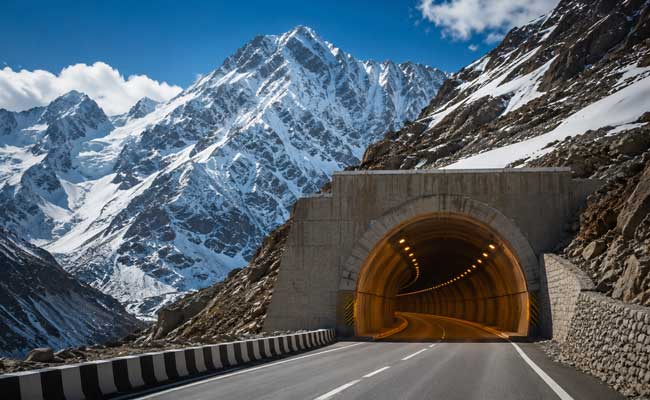
High in the Himalayas, where the air is thin and the weather unforgiving, a tunnel is never just a structure of stone and engineering—it becomes a statement of national will. The Zojila Tunnel is now approaching that moment, poised to transform one of the most difficult natural barriers separating the Kashmir Valley from Ladakh into history.
Spanning approximately 13.15 kilometres and constructed at an altitude of around 11,500 feet, the tunnel is among India’s most ambitious infrastructure projects. Recent updates suggest that excavation work is nearly complete, with the final breakthrough between both ends expected soon, followed by technical finishing works.
Year-Round Connectivity: A Structural Transformation

At present, the Zojila Pass remains closed for several months every year due to heavy snowfall, effectively cutting off Ladakh from the rest of the country. This seasonal isolation is not merely a geographical inconvenience but a serious logistical and administrative challenge.
Once operational, the tunnel will permanently change this reality. It will ensure all-weather connectivity between Srinagar and the Leh–Kargil region. The journey that currently takes several hours through harsh mountain terrain will be reduced to just 15 to 40 minutes. This is not merely a reduction in travel time—it represents a shift in accessibility, resilience, and integration.
Strategic Importance in National Security
Ladakh occupies a highly sensitive position in India’s border security architecture, sharing boundaries with both China and Pakistan. During winter months, when the Zojila Pass becomes impassable, the movement of troops and essential supplies is severely affected.
The tunnel will eliminate this seasonal vulnerability. It will ensure uninterrupted logistical support and faster troop mobility throughout the year. In strategic terms, this infrastructure strengthens operational readiness and reinforces India’s ability to respond swiftly in a sensitive border region.
Economic and Social Transformation
Beyond its strategic significance, the Zojila Tunnel is expected to bring profound socio-economic changes. Regions that remain cut off for months due to snow will gain uninterrupted access throughout the year.
This improved connectivity is likely to boost tourism, trade, and local employment opportunities in both Kashmir and Ladakh. It will also significantly enhance access to healthcare, education, and essential services for remote communities, improving overall quality of life.
An Engineering Challenge in Extreme Conditions
Building a tunnel in the Himalayas at such altitude involves extraordinary engineering challenges. Unstable geology, heavy snowfall, and frequent landslides make construction extremely complex and risky.
To overcome these challenges, the project has been executed from both ends simultaneously, reducing time and balancing geological risks. The Zojila Tunnel thus stands as a testament not only to modern engineering capability but also to India’s determination to build infrastructure in the most extreme environments.
Ultimately, the Zojila Tunnel is more than a transportation link. It is a bridge between isolation and integration, between seasonal separation and permanent connectivity—reshaping how geography defines opportunity in one of India’s most strategic regions.