
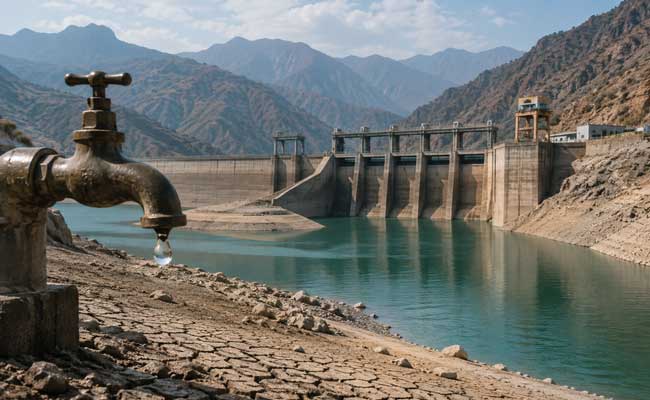
Islamabad: Pakistan’s water sector development plans are likely to face significant setbacks in the upcoming fiscal year after the government proposed allocations far below the funding required for ongoing and future projects, according to a report published by The Express Tribune.
The Ministry of Water Resources had estimated that approximately PKR 969 billion would be needed to support a range of development schemes. However, the proposed allocation stands at only PKR 179 billion, creating a substantial funding gap and raising concerns about the pace and viability of several critical infrastructure projects.
The report noted that the development programme for the next fiscal year includes 41 ongoing projects and only one new initiative. The sole new project relates to a hydropower generation facility linked to the Diamer-Bhasha Dam, for which the government has proposed an allocation of just PKR 500 million.


In addition, the budget proposes PKR 25 billion for the construction of the Diamer-Bhasha Dam and PKR 7 billion for land acquisition associated with the project.
Experts warn that the proposed allocations reflect the severe financial constraints facing Pakistan’s water sector. With less than 20 percent of the estimated funding requirement being met, several projects related to dams, hydropower generation, irrigation infrastructure and water management could experience delays or slower implementation.
The funding gap also underscores Pakistan’s broader economic challenges. Water infrastructure remains critical for agriculture, industrial development and energy production, yet fiscal pressures continue to limit the government’s ability to invest in large-scale development initiatives.
Analysts believe that inadequate investment in water storage facilities, irrigation networks and hydropower projects could exacerbate existing resource shortages and hamper the country’s long-term economic growth prospects.
The latest budget proposals highlight the growing disconnect between development objectives and available financial resources, reflecting the increasing strain on Pakistan’s public finances and its capacity to deliver essential infrastructure projects.