
Florida/Washington: The United States military has reportedly disabled a commercial oil tanker attempting to approach Iran, marking a sharp escalation in maritime enforcement operations linked to Iranian ports, even as broader tensions continue to intensify across the Middle East involving Israel, Hezbollah, and regional diplomatic efforts.
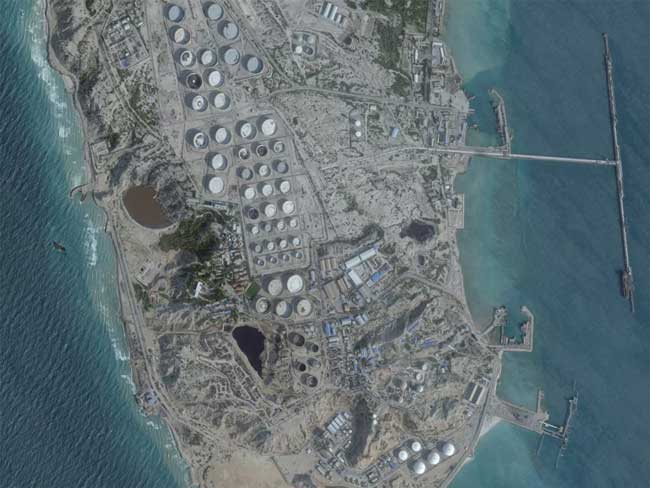
According to the US Central Command (CENTCOM), a Botswana-flagged oil tanker identified as M/T Lexie was targeted after allegedly sailing toward Iran’s Kharg Island. The vessel, reportedly not carrying cargo, is said to have ignored repeated warnings over a 24-hour period to change course.
CENTCOM stated that a US military aircraft ultimately stopped the vessel by striking its engine room with a Hellfire missile. The operation is part of an ongoing campaign that began on April 13, under which US forces claim to have disabled six commercial vessels and redirected 122 others attempting to enter or leave Iranian maritime zones.


In a separate maritime incident reported from the region, the Mediterranean Shipping Company (MSC) confirmed that its vessel Sariska V was hit by two projectiles near the port of Umm Qasr. The UK Maritime Trade Operations (UKMTO) had earlier reported an attack southeast of the port, without initially identifying the vessel.
Iran’s Islamic Revolutionary Guard Corps (IRGC) later claimed responsibility, stating that the vessel was US-owned and that the strike was retaliation for an earlier attack on an Iranian ship near Oman. However, MSC rejected these claims, calling them “completely unjustified,” and clarified that it is a neutral commercial carrier headquartered in Switzerland with Italian ownership and no affiliation with the United States or Israel.
Meanwhile, hostilities between Israel and Hezbollah continue on the ground, even as diplomatic talks involving Lebanese and Israeli representatives concluded their first day in Washington. The negotiations are set to resume at the US State Department.
US Secretary of State Marco Rubio, speaking before the Senate Foreign Relations Committee, expressed cautious optimism about a potential agreement but placed responsibility for the deadlock on Hezbollah. He stated that “Israel and Lebanon can make a peace deal tomorrow,” adding that Hezbollah remains the key obstacle. He also emphasized that talks involving Lebanon would remain separate from any diplomatic engagement concerning Iran.
Former US President Donald Trump claimed on Monday that he had brokered an agreement aimed at halting the violence. However, Lebanon’s embassy in Washington later clarified that the arrangement would initially focus on stopping Israeli strikes on Beirut and Hezbollah attacks on Israel before expanding further. Neither side has formally confirmed the deal, and clashes continue.
Lebanese Prime Minister Nawaf Salam described the negotiations as “the least costly option for Lebanon,” despite resistance from Hezbollah.
The humanitarian toll of the ongoing conflict continues to rise. According to Lebanon’s Health Ministry, at least 3,468 people have been killed since March 2 due to Israeli strikes, including 35 reported on Tuesday alone. Over the same period, 26 Israeli soldiers and one civilian contractor have also been killed.