
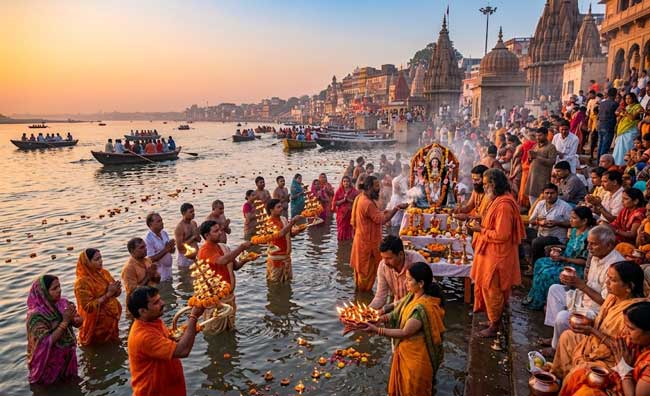
 Ganga Dussehra, one of the most sacred festivals in Hindu tradition, is being observed today, Monday, May 25, 2026. Celebrated on the Dashami Tithi of the Shukla Paksha in the month of Jyeshtha, the festival marks the divine descent of Goddess Ganga from heaven to earth. For this reason, it is also known as Gangavataran Day.
According to Hindu scriptures, taking a holy dip in the Ganga, offering prayers, and performing acts of charity on this day helps devotees cleanse themselves of ten types of sins and attain spiritual merit, prosperity, and ultimately liberation (moksha).
Significance of Ganga Dussehra
The word “Dussehra” in Ganga Dussehra is derived from “Dasha” (ten) and “Hara” (to destroy), signifying the destruction of ten sins. As mentioned in the Skanda Purana, offering water mixed with sesame seeds (Tilodaka) after a sacred bath on this day is believed to free a person from ten kinds of sins.


This year, the festival is considered especially auspicious due to the presence of Uttara Phalguni Nakshatra, Sarvartha Siddhi Yoga, and Ravi Yoga, enhancing the spiritual significance of the day.
Ganga Dussehra 2026: Auspicious Timings
- Dashami Tithi Begins: May 25, 2026, at 4:30 AM
- Dashami Tithi Ends: May 26, 2026, at 5:10 AM
- Brahma Muhurta: 4:04 AM to 4:45 AM
- Abhijit Muhurta: 11:51 AM to 12:46 PM
- Vijaya Muhurta: 2:36 PM to 3:31 PM
- Godhuli Muhurta: 7:09 PM to 7:30 PM
- Amrit Kaal: 8:33 PM to 10:14 PM
- Nishita Muhurta: 11:58 PM to 12:39 AM (May 26)
- Ravi Yoga: Throughout the day
Devotees are advised to perform holy bathing, worship, chanting, and charitable activities during these auspicious periods. Those unable to visit the Ganga can bathe at home using water mixed with a few drops of Gangajal and offer prayers with devotion.
Rituals to Perform on Ganga Dussehra
According to the Brahma Purana and Varaha Purana, observing a fast and worshipping Goddess Ganga on this day brings immense spiritual benefits. Reciting the Ganga Stotra ten times while meditating upon the goddess is believed to remove sins and fulfill sincere wishes.
A traditional practice associated with Ganga Dussehra is offering worship materials in multiples of ten, such as:
- Flowers
- Betel leaves
- Cloves
- Cardamom
- Fruits
- Sweets
- Lamps (Diyas)
These offerings symbolize the removal of ten sins and the attainment of divine blessings.
Importance of Charity
Charity holds special significance on Ganga Dussehra. Donating food, clothes, fruits, water vessels, umbrellas, and other essentials to the needy is considered highly meritorious. Many devotees also make offerings to priests and support religious and charitable causes.
Religious beliefs suggest that those who perform holy bathing, worship, and charity with devotion on this sacred day receive divine blessings, enjoy happiness and prosperity in life, and move closer to spiritual liberation.