
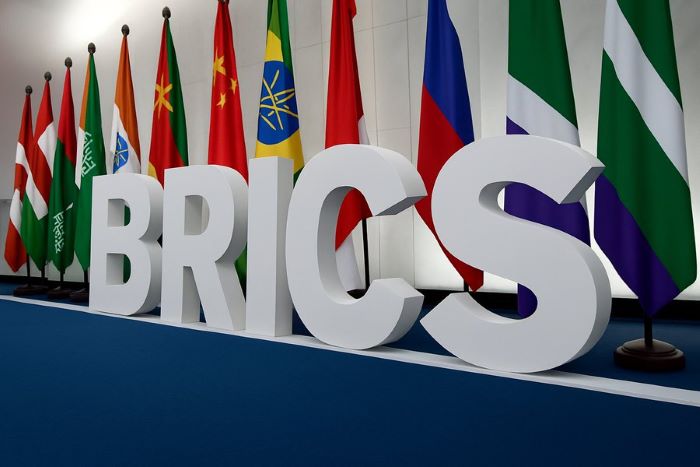
New Delhi: Following the BRICS Foreign Ministers’ meeting, the BRICS Counter-Terrorism Working Group (CTWG) is currently holding discussions in Delhi. At the very outset on Thursday, India made it clear that countries providing shelter and support to terrorism must be held accountable — a message widely seen as directed at Pakistan.
Russia and Indonesia were quick to support India’s concerns regarding terrorism and cross-border terror networks.
India’s Stand Against Terrorism Gains Support
At the BRICS Counter-Terrorism Working Group meeting, India stressed that:

- A zero-tolerance policy toward terrorism is essential
- Strong international cooperation is necessary to combat terror networks
India argued that without global coordination, it would be difficult to stop:
- Terror financing
- Radicalization
- Money laundering
- Misuse of emerging technologies by terrorist organizations
Focus on Strengthening Anti-Terror Strategy
According to an ET report, the BRICS CTWG is now working on ways to further strengthen its counter-terrorism strategy.
The 11-member group is discussing:
- Cyber threats posed by terrorist organizations
- Sharing of intelligence and information related to FATF (Financial Action Task Force) challenges
- Better coordination mechanisms to tackle global terrorism
Russia and Indonesia Leading Strategic Push
From India’s perspective, one of the most significant developments is that countries like Russia and Indonesia are leading this strategic anti-terror initiative within BRICS.
- Both nations have openly supported India’s concerns regarding cross-border terrorism and terrorist infrastructure operating across borders.
- Russia has traditionally stood firmly with India on terrorism-related issues.
- Indonesia’s support is especially notable because it is the world’s largest Muslim-majority country and has previously expressed concerns within the Organization of Islamic Cooperation (OIC) over Pakistan’s stance on Kashmir.
Pakistan Faces Growing Isolation Among Muslim Nations
Apart from Indonesia, several major Muslim-majority countries are now part of BRICS, including:
- Iran
- Saudi Arabia
- Egypt
- United Arab Emirates (UAE)
Malaysia, another Muslim-majority nation, is also among BRICS partner countries.
India’s strong emphasis on cross-border terrorism in the presence of these countries — and the discussions on measures to curb it — is being viewed as a diplomatic setback for Pakistan. Analysts say Pakistan is increasingly being exposed even before nations that have traditionally been sympathetic toward it.
As discussions within the BRICS Counter-Terrorism Working Group deepen, and as India’s concerns receive stronger backing from countries like Russia and Indonesia, greater international attention may focus on Pakistan-linked terror networks and activities.
Foundation Laid During BRICS Foreign Ministers’ Meeting
The push for a joint anti-terror framework within BRICS did not emerge suddenly. Its foundation was laid during the recently concluded meeting of BRICS foreign ministers.
At that meeting:
- A strong anti-terror declaration was adopted
- India’s concerns regarding cross-border terrorism were included
- BRICS nations jointly condemned terrorism in all forms, regardless of motive or justification
This has been widely interpreted as international endorsement of India’s long-standing position on terrorism.