
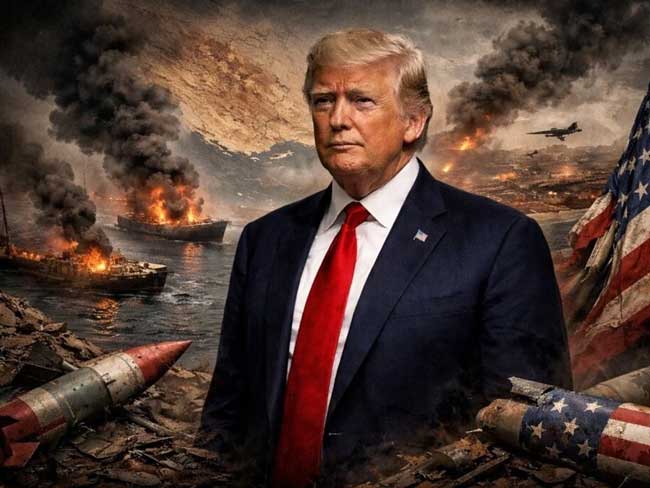
Desk : Tensions in the Middle East have intensified after US President Donald Trump made a strong statement regarding Iran. Trump claimed that increasing American pressure has forced Iran toward negotiations and possible compromise, triggering fresh debate in international political circles.
The United States and Iran have remained at odds for months, with military and diplomatic tensions steadily escalating. The US administration has increased its military presence in the Persian Gulf and the Strait of Hormuz, while Iran has also indicated stronger defensive preparations.
Trump warned that Washington could take tougher measures if Tehran failed to soften its stance on the nuclear issue. However, he also suggested that the possibility of dialogue between the two countries still remains open.


International analysts believe Trump’s remarks are aimed more at creating political and diplomatic pressure rather than indicating any direct American control over Iran. Experts say such statements are part of a broader strategic messaging campaign amid ongoing regional instability.
The rising tensions have also affected global oil markets, with fluctuations in crude oil prices being reported amid fears that any disruption in the Strait of Hormuz could impact international energy supplies.
Reacting to the American statements, Iran said it would not bow to pressure and warned that any military action against the country would receive a “strong and widespread” response.
The developing situation in the Middle East is being closely watched across the world, as experts believe the future course of US-Iran relations could significantly impact global politics and the international economy.