
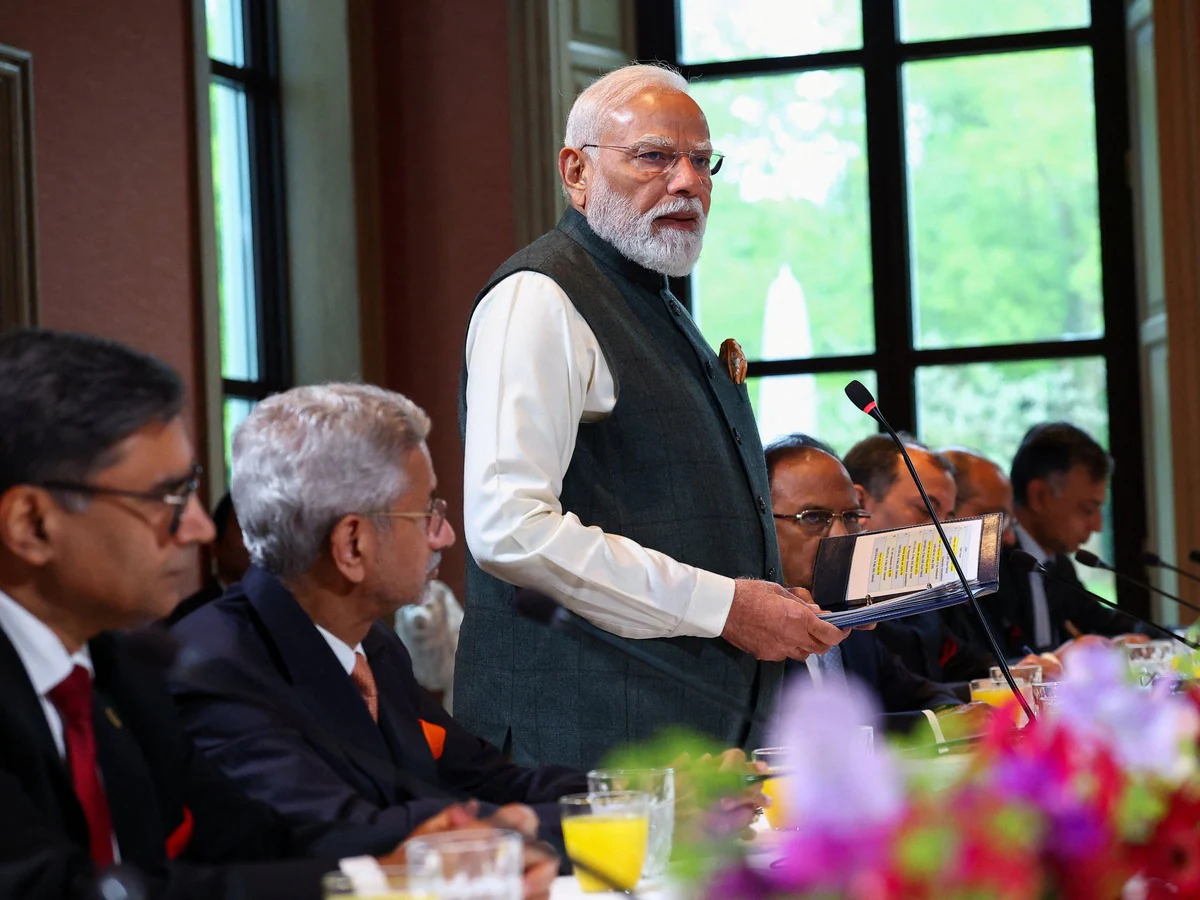
Desk: Amid ongoing wars and rising global tensions, Prime Minister Narendra Modi described the current decade as an era of growing disasters. He warned that if the present situation is not changed soon, the hard-earned achievements of the past several decades could be destroyed. He also cautioned that a large section of the world’s population could once again fall into the trap of poverty.
During the second phase of his five-nation tour, PM Modi addressed the Indian diaspora in the Netherlands and spoke about the global crisis. He said:
“This decade has been a decade of challenges for humanity. First came the coronavirus pandemic, and then wars began. Since then, the world has been struggling continuously with an energy crisis. Gradually, this decade is turning into a decade of disasters for the world.”
He further highlighted the danger looming over millions of people worldwide, saying:
“We can all see that if these conditions are not changed quickly, the achievements of the past several decades may be destroyed. A large population of the world could once again get trapped in poverty.”
Global Crisis Deepens
It is worth noting that the world has been facing continuous crises since the Russia-Ukraine conflict and later the tensions involving Iran and the United States. Although relative calm has returned to Iran after nearly 40 days of conflict, the Strait of Hormuz remains effectively blocked by Iran.
The disruption in global oil supply has intensified the worldwide energy crisis. The concerning aspect is that both the United States and Iran are claiming victory in the conflict, making an early reopening of Hormuz unlikely.
PM Modi’s Appeal During the Energy Crisis
Earlier in May, amid fears of a prolonged energy crisis, the government urged citizens to conserve energy and reduce unnecessary spending. During an event in Hyderabad, PM Modi appealed to people to work from home wherever possible and avoid foreign travel unless necessary. He also linked fuel conservation and saving foreign exchange reserves with patriotism.
What Did PM Modi Say?
Buy Less Gold
PM Modi pointed out Indians’ strong attraction toward gold. He said India imports billions of dollars worth of gold every year, putting pressure on the country’s foreign exchange reserves.
To reduce this burden, he appealed to citizens not to buy gold for the next one year, regardless of occasions or celebrations. Following this appeal, the government increased import duties on gold.
Save Fuel and Energy
India imports most of its oil and gas requirements, which heavily impacts foreign exchange reserves. PM Modi urged citizens to use public transport, carpooling, electric vehicles, and work-from-home arrangements to save fuel and reduce pressure on reserves.
Recalling the COVID-19 pandemic period during the Hyderabad event, he noted that working from home had become normal at that time, and people would not find it difficult to adapt again.
Soon after these remarks, Indian oil companies increased petrol and diesel prices by ₹3 per litre each. Later, CNG prices were also raised by ₹1.
Avoid Unnecessary Foreign Travel
PM Modi also appealed to Indians to limit foreign travel. He emphasized that India itself has many beautiful destinations worth exploring.
Representing the government’s efforts to conserve foreign exchange, PM Modi said:
“We should try to use only as much as necessary in order to save foreign exchange and reduce the adverse effects of war-related crises.”
Fear of Further Escalation
The world currently does not appear close to escaping the energy crisis. No agreement has yet been reached between the United States and Iran. At the same time, signals from the U.S. suggest the possibility of another strike on Iran.
Iran, on the other hand, has made it clear that if the U.S. and Israel attack again, its retaliation would be even more severe.
If conflict resumes, it could not only keep the Strait of Hormuz closed but also impact energy facilities across Gulf nations. Such a war would become a major threat not only for Iran and the United States, but for the entire world.