
 In the spiritual traditions of India, a vrat is not merely a ritualistic fast; it is a journey of discipline, faith, and inner awakening. Among such revered observances, Vat Savitri Vrat holds a deeply emotional and spiritual significance. Celebrated primarily by married women, this sacred fast symbolizes unwavering devotion, prayer for the well-being of one’s husband, and the eternal strength of commitment rooted in dharma.
Observed on the Amavasya of the Jyestha month, the festival is far more than a social custom. It is a timeless reminder that love, when guided by truth and spiritual strength, becomes a force capable of overcoming even destiny itself.
Savitri: The Embodiment of Courage and Spiritual Wisdom
The essence of this vrat emerges from the legendary tale of Savitri and Satyavan, narrated in the Mahabharata. Princess Savitri chose Satyavan as her husband despite knowing that his life was destined to be short. When the appointed moment arrived and Yama, the god of death, came to claim Satyavan’s soul, Savitri followed him with extraordinary determination, wisdom, and devotion.


Her unwavering resolve, humility, and spiritual intelligence moved even Yama. Ultimately, she succeeded in restoring her husband’s life.
This story is not merely mythology; it is a profound spiritual metaphor. Savitri represents the power of truth, purity, patience, and inner conviction. She teaches that sincere devotion combined with courage can challenge even the harshest realities of life.
The Spiritual Symbolism of the Banyan Tree
The Vat or banyan tree occupies a sacred place in Indian philosophy. Known for its vast roots and long life, it symbolizes immortality, stability, and eternal continuity.
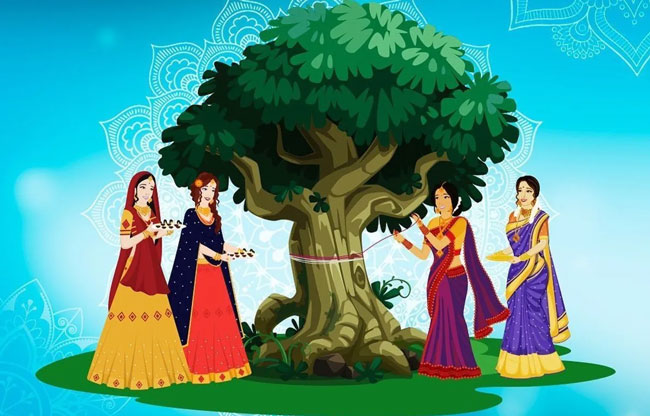
During the vrat, women tie sacred threads around the banyan tree while offering prayers and circumambulating it. Spiritually, this act represents the desire to bind relationships with trust, endurance, and sacred commitment. The tree itself becomes a reminder that strong relationships, like deep roots, survive the storms of time.
Beyond Ritual: The True Meaning of Fasting
The deeper purpose of Vat Savitri Vrat lies not in external rituals alone, but in inner purification. Traditional teachings advise devotees to avoid anger, negativity, gossip, harsh speech, and ego during the fast.
Such guidance reveals an important spiritual truth: fasting is incomplete if only the body abstains while the mind remains disturbed. True sadhana begins when one learns to discipline thoughts, emotions, and speech.
Giving up food for a day may be simple; giving up pride and negativity is the real spiritual challenge.
Relevance in the Modern World
In today’s fast-paced world, relationships often suffer from impatience, misunderstanding, and emotional distance. Vat Savitri Vrat reminds society of the importance of loyalty, sacrifice, emotional resilience, and mutual respect.
Though traditionally associated with married women, the spiritual values behind this observance are universal. The ideals of Savitri — dedication, integrity, compassion, and courage — are meaningful for anyone seeking depth and sincerity in relationships.
The vrat also reflects the Indian spiritual understanding that marriage is not merely a social arrangement, but a sacred partnership built upon shared duty, trust, and emotional harmony.
The Eternal Light of Faith
The essence of Indian spirituality lies in transformation from within. Rituals become meaningful only when they awaken awareness, gratitude, and compassion in human life.
Vat Savitri Vrat ultimately teaches that love becomes sacred when joined with selflessness and spiritual consciousness. It is not merely a festival of tradition, but a celebration of the soul’s strength — a reminder that devotion rooted in truth possesses the power to transcend fear, suffering, and even fate itself.