
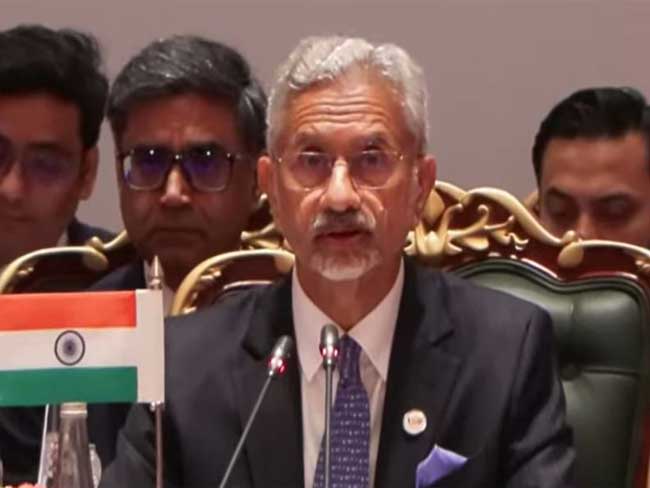
Desk : External Affairs Minister Dr. S. Jaishankar has said that continuous dialogue and coordination among member countries is essential for the institutional development of BRICS (Brazil, Russia, India, China, and South Africa), in order to ensure its smooth and effective functioning. He noted that in a rapidly changing global environment, the role of BRICS has become even more significant, making it necessary to further strengthen its institutional framework.
The External Affairs Minister made these remarks during the BRICS Foreign Ministers’ Meeting, where he shared India’s perspective on the expansion of the grouping, its growing responsibilities, and its future direction. He said that BRICS is no longer limited to economic cooperation alone, but has emerged as an important platform for collective discussion on global issues.
He informed that during India’s chairmanship, more than 80 meetings under BRICS have been held so far, with active participation from all member countries. These meetings have given new momentum to cooperation across various sectors and have further strengthened dialogue among members.

Jaishankar also stated that new member countries of BRICS should move forward in line with the group’s core principles and consensus-based approach, so that the decision-making process remains effective and balanced. He emphasized that the future of BRICS depends on mutual cooperation, trust, and collective development.
He further said that India has consistently promoted engagement with partner countries during its chairmanship, which has enhanced both the reach and influence of the group. He underlined that in the current era of global instability, BRICS should act as a stabilizing and constructive force.
According to experts, with the expansion of BRICS, there is an increasing need to strengthen its institutional framework so that the organization can more effectively represent the voice of the Global South.