

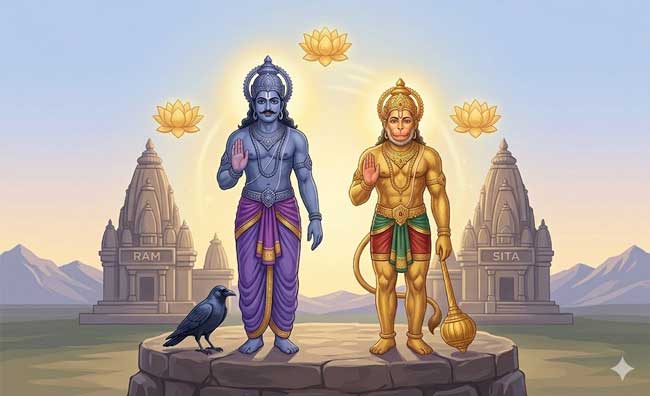
 In Indian spiritual tradition, the relationship between Lord Shani and Lord Hanuman is not merely a mythological reference, but a profound reflection of the inner human struggle between fear and faith. On one side stands Shani Dev, the embodiment of justice, karma, and discipline. On the other stands Lord Hanuman, the symbol of devotion, courage, and absolute fearlessness. Together, they reveal a deep spiritual truth—the path to liberation from fear.
Shani Dev is often misunderstood as a deity of punishment and suffering. However, in essence, Shani represents the unavoidable law of karma. He does not create suffering; he reflects the consequences of one’s actions. When life brings hardships, it is not cruelty but the unfolding of karmic balance. Yet, the human mind often reacts with fear, anxiety, and emotional instability when faced with such challenges.
This is where Lord Hanuman becomes spiritually significant. Hanuman is not just a figure of strength; he represents unwavering faith and inner stability. His presence symbolizes the power of devotion that dissolves fear. When Shani’s influence brings trials in life, it is Hanuman’s energy—inner courage, discipline, and devotion—that helps the individual remain steady and unshaken.


According to mythological tradition, Shani Dev once bowed before Hanuman Ji, acknowledging his immense devotion to Lord Rama. This episode is not just symbolic reverence; it carries a deeper spiritual message. It suggests that pure devotion and fearless surrender can soften even the harshest karmic experiences.
The essence of this relationship lies in understanding that Shani cannot be removed from life, as he represents the law of karma itself. However, fear associated with Shani can be transformed. When a person awakens Hanuman-like qualities—devotion, courage, self-discipline, and trust in truth—Shani’s influence changes from suffering to learning.
In modern life as well, this teaching holds great relevance. Moments of failure, delay, and struggle are often seen as negative phases influenced by Shani. But if one responds with Hanuman-like strength—patience, effort, and inner faith—these very challenges become opportunities for transformation and growth.
Thus, the relationship between Hanuman and Shani is not one of conflict but of balance. Shani represents the reality of karma, while Hanuman represents the strength to face that reality without fear. One awakens awareness through difficulty, and the other dissolves fear through devotion.
The ultimate spiritual secret is simple yet profound: fear does not end by avoiding life’s karmic truths, but by facing them with inner faith. When this understanding awakens, Shani becomes a teacher rather than a source of fear, and Hanuman becomes the eternal inner force that transforms fear into strength and surrender into liberation.