

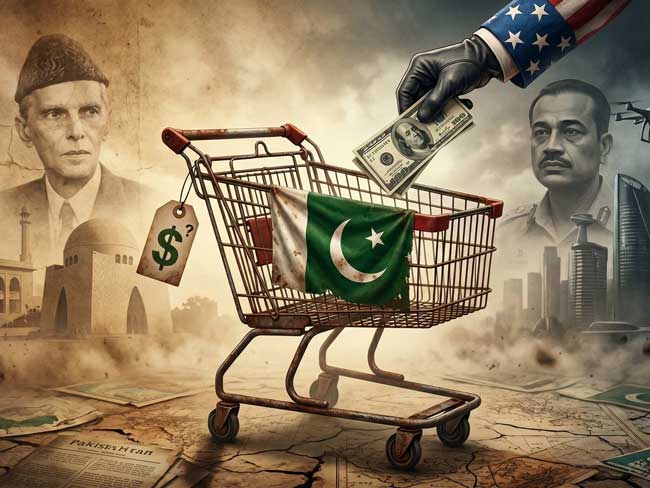
The relationship between Pakistan and the United States has often been described as one of convenience rather than consistency. From Pakistan’s creation in 1947 to the strategic calculations of 2026, ties between the two countries have largely revolved around military cooperation, regional security, economic assistance and shifting geopolitical interests.
Over the decades, Pakistan’s location at the crossroads of South Asia, Central Asia and the Middle East has made it strategically valuable to Washington. In return, successive governments in Islamabad have sought military aid, financial support and diplomatic backing from the United States.
Early Cold War Alliance
Soon after independence, Pakistan aligned itself with the Western bloc during the Cold War. In the 1950s, it joined US-backed military alliances such as the Southeast Asia Treaty Organization (SEATO) and the Central Treaty Organization (CENTO).

These alliances brought Pakistan military assistance, weapons and economic aid. The United States also viewed Pakistan as an important regional partner in containing Soviet influence.
Afghanistan and the Soviet Era
The Soviet invasion of Afghanistan in 1979 marked a major turning point in US-Pakistan relations. Pakistan became the frontline state for America’s anti-Soviet strategy in the region.
Billions of dollars in aid flowed into Pakistan, while the country played a key role in supporting Afghan resistance groups. During this period, Pakistan’s intelligence establishment became deeply involved in regional security operations, strengthening its leverage with Washington.
Post-9/11 Partnership
After the September 11, 2001 terrorist attacks, Pakistan once again became central to US foreign policy. It was declared a major non-NATO ally and received significant military and economic assistance as part of the global war on terror.
However, the partnership remained complicated. American officials repeatedly expressed concerns over militant safe havens and allegations of Pakistan pursuing a dual policy—cooperating publicly while tolerating certain extremist networks.
Years of Strain and Reset
In later years, relations cooled as Washington deepened ties with India and Pakistan moved closer to China, particularly through the China-Pakistan Economic Corridor (CPEC).
Yet despite tensions, the two countries never fully disengaged. Pakistan remained relevant because of Afghanistan, counterterrorism concerns and its influence in the Islamic world.
Why Pakistan Still Matters in 2026
As Pakistan faces economic challenges, debt pressure and domestic instability, it has again sought stronger engagement with the United States and Western institutions.
At the same time, rising tensions involving Iran, instability in Afghanistan and broader competition in Asia have renewed Pakistan’s strategic significance. Analysts believe Washington still sees Islamabad as a country it cannot ignore, even if the relationship is no longer as dominant as it once was.
A Transactional Relationship
Experts often describe US-Pakistan ties as transactional—driven by immediate needs rather than shared long-term values. Whenever regional crises emerge, Pakistan’s importance tends to rise. When crises fade, mistrust returns.
From the Cold War to the war on terror and the shifting geopolitics of 2026, one theme remains constant: both nations continue to engage each other when strategic interests align.