

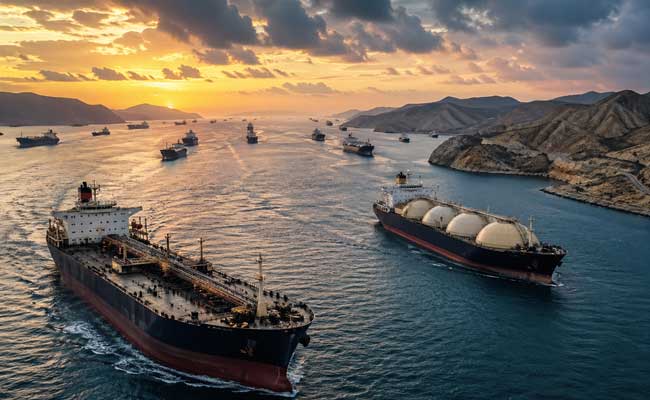
Desk : The ongoing tensions in the Middle East are now severely impacting global energy supply chains. Oil and liquefied natural gas (LNG) shipments through the Strait of Hormuz—one of the world’s most critical maritime routes—have been disrupted, creating pressure on several Asian economies including China, India, and Pakistan.
According to reports, a significant share of the world’s crude oil and LNG passes daily through the Strait of Hormuz. However, current instability in the region has affected maritime movement, leading to disruptions in supply flows and increased volatility in the international energy market.
The impact is being felt most strongly across Asia, where many countries depend heavily on imports to meet their energy requirements. Concerns are rising over electricity generation, fuel availability, and industrial output as supply uncertainty continues.

Pakistan is reported to be facing a particularly difficult situation, as it was already struggling with energy shortages. The disruption has further strained LNG supplies, forcing the country to rely on expensive spot market purchases, adding pressure on its economy.
China, the world’s largest LNG importer, is closely monitoring the situation. India, Japan, and South Korea are also evaluating alternative supply sources and strengthening strategic reserves to safeguard their energy security.
Experts note that any disruption in the Strait of Hormuz directly influences global oil and gas prices. The current situation has already triggered a rise in energy prices in the international market, while uncertainty over supply stability continues to persist.