
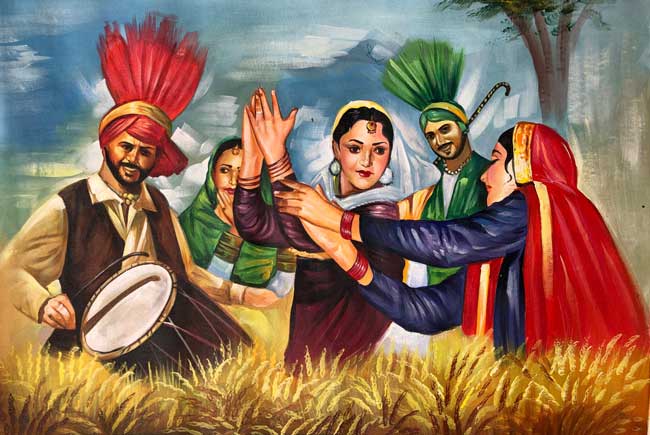
 Baisakhi is one of the most significant festivals of Indian tradition, deeply rooted in both agrarian life and spiritual awakening. It is celebrated every year when the sun enters the zodiac sign of Aries, marking a symbolic transition in nature as well as in human consciousness. In Punjab and many parts of North India, this day is observed with great joy, gratitude, and devotion.
Agricultural Significance
At its core, Baisakhi is a harvest festival. It marks the time when the Rabi crop, especially wheat, is ready for harvesting. For farmers, this day represents the culmination of months of hard work, patience, and dependence on nature’s rhythm. The golden fields of wheat swaying in the wind become a visual expression of abundance and fulfillment.
Baisakhi is therefore not just a celebration of food or prosperity, but a spiritual acknowledgment of the bond between human effort and natural grace. It reminds us that every grain carries within it the story of labor, soil, water, and time.


Spiritual and Historical Importance
Baisakhi also holds profound historical and spiritual significance in Sikh tradition. On this day in 1699, Guru Gobind Singh Ji, the tenth Sikh Guru, established the Khalsa Panth at Anandpur Sahib. This moment transformed the Sikh community into a collective bound by discipline, courage, equality, and spiritual strength.
The formation of the Khalsa was not merely a religious event, but a powerful declaration of human dignity and resistance against injustice. It emphasized that spirituality is not passive devotion alone, but also the courage to stand for truth and righteousness.
Cultural Celebration
Across Punjab and other regions, Baisakhi is celebrated with vibrant cultural expressions. People gather in gurdwaras for prayers and kirtan (devotional singing). The community kitchen, or langar, serves food to all without discrimination, reflecting the principle of equality.
Traditional folk dances like Bhangra and Giddha fill the atmosphere with energy and joy. These performances are not only artistic expressions but also symbolic representations of gratitude toward life, harvest, and community harmony.
A Festival Beyond Boundaries
While deeply rooted in Sikh tradition, Baisakhi transcends religious and regional boundaries. In different parts of India, it is associated with new year celebrations, solar transitions, or local harvest festivals. This universality makes it a shared cultural moment that connects people across diverse traditions.
Contemporary Relevance
In today’s world, Baisakhi carries an even broader message. It reminds us of the importance of sustainable living, respect for farmers, and harmony with nature. In an age of rapid modernization, the festival encourages us to pause and acknowledge the natural systems that sustain human life.
It also reinforces social values of equality, service, and community bonding. The spirit of langar, where everyone sits together regardless of status, continues to be a powerful reminder of human unity.
Conclusion
Baisakhi is more than a festival; it is a philosophy of life. It brings together the gratitude of the farmer, the courage of spiritual tradition, and the joy of collective celebration. It teaches that true prosperity is not only measured in material abundance but also in gratitude, humility, and unity.
Every year, Baisakhi arrives not just as a date on the calendar, but as a renewal of hope, energy, and human connection with nature and society.