

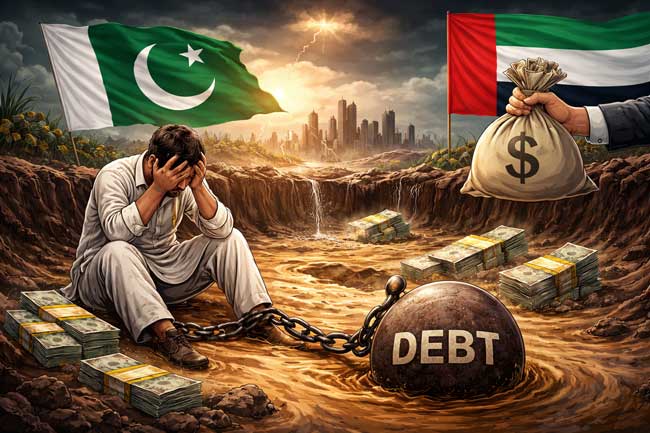
Pakistan’s already tight economic rope is facing another tug-of-war, this time courtesy of the United Arab Emirates (UAE). Reports indicate that Islamabad now has to cough up nearly $3.5 billion to the UAE within April—a demand that has left officials crunching numbers and probably reaching for a stress ball.
These aren’t new loans—the funds had been rolled over multiple times in the past—but now the UAE has decided it’s time for a little accountability. For Pakistan, this means less wiggle room to manage foreign exchange pressures at a time when reserves are anything but robust.
The country is juggling a widening fiscal deficit, declining foreign investment, and sluggish exports, which together feel a lot like trying to balance on a tightrope while carrying a stack of unpaid bills. Economists warn that meeting such a hefty repayment in a short window could drain reserves that are already teetering on the edge.


Data shows Pakistan’s external debt has ballooned over the years, creating a significant per capita liability—a reminder that borrowing today is paying off… tomorrow, if at all. Analysts point to structural economic issues: heavy reliance on external financing and a domestic revenue system that’s more “suggestion box” than “reliable income.”
Officials are reportedly crafting a phased repayment plan to avoid disruptions to essential imports and keep the currency from doing somersaults. But the UAE’s firm stance signals a changing tune in international support: the friends who once offered soft loans may now be expecting a more disciplined approach.
Experts agree: without serious reforms and healthier economic fundamentals, Pakistan might find itself in the recurring “balance-of-payments blues.” The UAE’s April call for repayment is not just a reminder of debt—it’s a nudge for Islamabad to get its economic act together before the next financial headache arrives.