

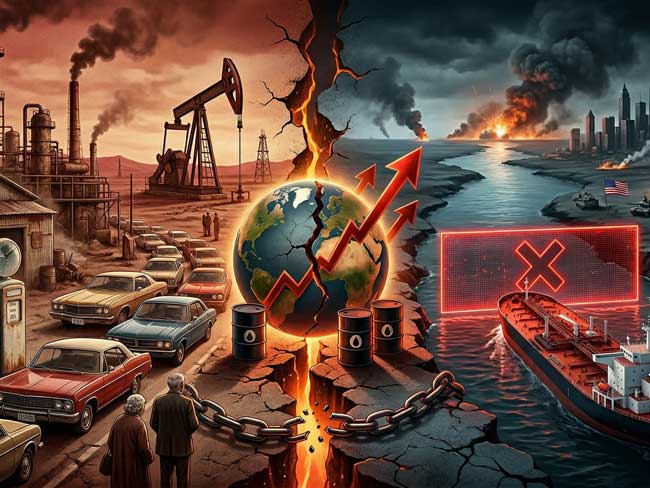
The world is teetering on the edge of what could become one of the most severe energy crises in modern history. The trigger this time is a geopolitical flashpoint in the Middle East — the near closure of the Strait of Hormuz, a critical artery for global oil and gas supplies. The situation recalls the historic oil shocks of the 1970s, but the scale today is unprecedented.
A Look Back: The 1970s Oil Crises
The 1970s saw two major disruptions that reshaped the global energy landscape:
- 1973 Oil Embargo: Amid the Arab-Israeli War, several Arab oil-exporting nations imposed a trade embargo on the United States and its allies. Oil prices quadrupled, sending shockwaves through global economies and triggering severe inflation.
- 1979 Iranian Revolution: Political upheaval in Iran caused a sharp decline in oil production and exports. This further spiked oil prices and created widespread panic in energy markets.
These crises underscored the world’s heavy dependence on Middle Eastern oil and exposed the vulnerabilities of a global economy tethered to fossil fuels.


The Current Crisis: Why It’s Different
Today’s energy crunch shares some characteristics with the 1970s, but several factors make it potentially more disruptive:
Strait of Hormuz at the Heart of the Crisis
The Strait of Hormuz is among the world’s most strategically important maritime chokepoints, accounting for roughly 20% of global oil and gas trade. Any disruption here sends immediate reverberations across global markets.
Ongoing geopolitical tensions involving the United States, Iran, and Israel have effectively choked this passage, creating supply constraints and price volatility.
Geopolitical Uncertainty
Unlike the 1970s, today’s crisis unfolds against a backdrop of complex international relations, heightened sanctions, and regional conflicts that threaten to extend the disruption over months rather than weeks.
Scale and Market Sensitivity
While the 1970s shocks caused a roughly 5–7% supply reduction, the present crisis threatens up to 20% of global oil exports. The scale alone is alarming, with potential ripple effects on inflation, economic growth, and energy security worldwide.
Modern Buffers vs. Greater Vulnerabilities
Unlike the past, today nations have strategic petroleum reserves, diversified energy portfolios, and better global coordination mechanisms. However, the magnitude of disruption, combined with high global energy demand, creates a perfect storm scenario.
Economists warn that prolonged closure or instability could cause a surge in fuel prices, exacerbate inflation, and trigger recessions in energy-importing nations, especially in Asia and Europe.
Global Implications
- Fuel Inflation: Oil, diesel, and gas prices are expected to spike, hitting both consumers and industries.
- Economic Slowdown: Industries dependent on energy-intensive operations could face production halts, threatening growth trajectories.
- Strategic Realignments: Nations may accelerate energy diversification, including renewables and alternative fuels, to reduce reliance on volatile Middle Eastern supplies.
Conclusion
The oil shocks of the 1970s reshaped global energy thinking. Today, the world faces a crisis that could surpass history in both scale and impact. The near closure of the Strait of Hormuz is a stark reminder of geopolitics’ power to disrupt energy markets.
While modern economies are better equipped than their 1970s counterparts, the magnitude of supply disruption and global dependence on fossil fuels make this crisis a test of international resilience, energy security, and economic foresight.