

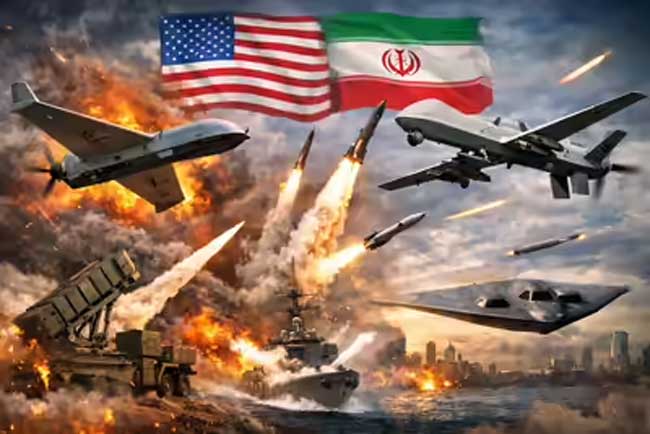
Amid the ongoing crisis in West Asia, Iran’s control over the Strait of Hormuz has emerged as its most potent strategic lever. Following attacks on several tankers, Tehran has effectively asserted control over the passage, allowing only vessels with explicit Iranian authorization to transit. The Iranian authorities have made it clear that ships from the United States, Israel, and their allies will not be permitted passage.
When asked whether the US would deploy its navy to reopen the Strait and ensure safe passage for commercial vessels, the White House appeared reluctant to commit. Experts suggest that Washington’s hesitation is rooted in historical precedent: more than four decades ago, a similar mission to secure Hormuz had resulted in significant US naval losses.
Hormuz: A Historical Strategic Pawn
The Strait of Hormuz has always been a critical strategic asset for Iran. During the Iran-Iraq war, Tehran repeatedly targeted this vital waterway.


The United States has long maintained strategic interests in West Asia. Following Iran’s Islamic Revolution in 1979, Ayatollah Khomeini came to power, forcing the US-backed Shah to flee and curtailing Western influence over Iranian oil. In response, the US supported Iraqi leader Saddam Hussein in his military campaign against Iran.
By 1984, when Iraq could not secure decisive victories on land, it began targeting Iranian ships transiting Hormuz. In retaliation, Iran struck international vessels navigating the Strait, especially those transporting supplies to Iraq. These attacks disrupted international trade, prompting countries like Qatar to seek assistance from both the US and the Soviet Union. Initially, the Soviets responded, helping secure oil shipments. However, the US, unwilling to tolerate Soviet influence in the region and considering Iran an adversary, deployed its naval forces in 1986 to protect commercial shipping. Within months, the US Navy established a significant presence, escorting Qatar’s vessels and other international merchant ships.
Costs of Securing Hormuz
Securing Hormuz, however, proved costly for the US. On May 17, 1987, the American warship USS Stark was struck by two missiles accidentally fired by an Iraqi aircraft, resulting in 37 US military deaths and several injuries. The incident underscored the deadly risks of naval operations in a conflict zone. Then-President Ronald Reagan emphasized the ever-present dangers faced by military personnel in such volatile theaters.
Additionally, the USS Samuel B. Roberts struck an Iranian-laid mine in 1987, nearly splitting the ship in two, though the crew managed to save it through remarkable bravery. Another vessel, the USS Bridgeton, also hit a mine while escorting commercial ships. These repeated setbacks highlighted the severe vulnerabilities the US faced in naval operations in the Gulf.
In response to these attacks, the US launched Operation Praying Mantis, targeting Iranian naval assets and oil platforms. Despite the offensive, the Gulf region remained tense until a UN-mediated ceasefire in 1988 brought a fragile peace. Ayatollah Khomeini famously dismissed the agreement as “a sip of poison.”
The heavy losses sustained by the US during this period serve as a cautionary tale. Modern US attempts to reopen Hormuz without relying on allies could risk similar or even greater damage.
Present-Day Context
Since the 1990s, technological advancements have dramatically reshaped warfare. Drones and AI-powered systems now redefine naval engagement, making large surface warships highly vulnerable. Iran, for instance, could potentially inflict significant damage with a single $20,000 drone—a stark contrast to the pre-tech era losses suffered by the US.
Furthermore, the presence of naval mines in the Strait remains a looming threat. While unconfirmed, these underwater explosives pose serious risks to any military operation. The US’s mine-clearing capabilities are limited, potentially requiring heavy reliance on allied support. Yet, geopolitical complexities—ranging from Europe’s cautious stance to other nations’ unwillingness to risk involvement—make multilateral cooperation uncertain.
Some countries have recently confirmed their presence in the Gulf, but analysts argue that a more proactive US strategy could have preemptively ensured tanker security. Experts note that if the Trump administration had learned from history, the framework for protecting commercial shipping might already have been in place.
Conclusion
Iran’s control of the Strait of Hormuz is not just a tactical maneuver; it is a strategic assertion of power with deep historical roots. For the United States, the decision to intervene is weighed heavily against past losses and modern technological risks. As the world watches the unfolding crisis, the lessons of 1980s naval engagements remain as relevant today as they were decades ago, underscoring the intricate balance of power in this vital maritime chokepoint.