

Desk : Amid escalating tensions and a looming conflict between the United States and Iran, Iranian Foreign Minister Abbas Araghchi has claimed that Iran proposed discussions on “nuclear disarmament,” but the U.S. refused to engage. According to Araghchi, during talks held on February 26 in Geneva, he raised the issue of nuclear weapons, but the American side was unwilling to discuss it, focusing instead solely on military confrontation.
He added that a delegation, led by him, had visited the U.S. to engage in talks. The American delegation was headed by Steve Witkoff. A follow-up meeting between technical teams from both countries was scheduled in Vienna from March 2, but hostilities broke out before it could take place.
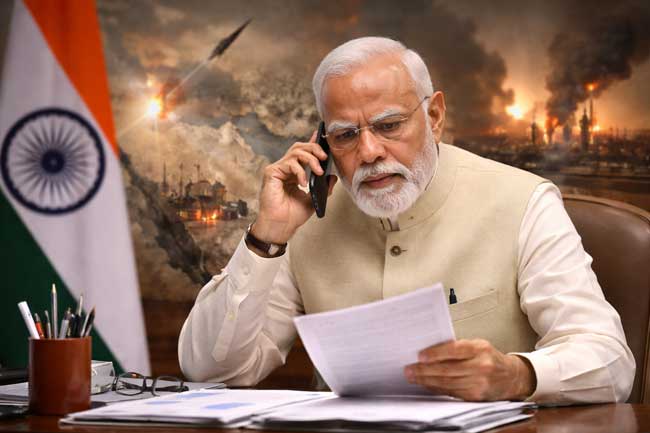
In parallel, India has taken diplomatic steps to address the rising tensions in West Asia. Prime Minister Narendra Modi spoke by phone on Thursday night with Iranian President Masoud Padeshkian to discuss the “serious situation” in the region. The Prime Minister expressed deep concern over rising tensions, loss of civilian lives, and damage to civilian infrastructure.


He emphasized that ensuring the safety of Indian citizens and maintaining uninterrupted transportation of goods and fuel remain India’s top priorities. On social media platform X, he stated that India remains committed to peace and stability in the region, and dialogue and diplomacy are the most appropriate means to resolve the crisis.
According to an official statement, President Padeshkian briefed Prime Minister Modi on the current situation in Iran and shared his perspective on recent regional developments. Both leaders agreed to remain in close contact.
Meanwhile, Iran has closed the strategically vital Hormuz Strait, through which a significant portion of India’s energy imports passes. Two days ago, the Iranian military fired upon an Indian oil tanker attempting to pass through the strait.
Last month, coordinated attacks against Iran were carried out by United States and Israel, during which Iran’s Supreme Leader Ayatollah Ali Khamenei was reportedly killed. In retaliation, Iran launched drone and missile attacks on Israeli and U.S. military installations in the Gulf, impacting major trade and aviation hubs such as Dubai and Doha.
In recent days, Prime Minister Modi has also spoken with leaders from Oman, Kuwait, Bahrain, Saudi Arabia, United Arab Emirates, Jordan, Israel, and Qatar. He condemned violations of their sovereignty and regional integrity while discussing the safety and welfare of Indian citizens residing in these countries.
Approximately one million Indians live across Gulf countries and West Asia. Around 10,000 reside in Iran, and over 40,000 live in Israel.