
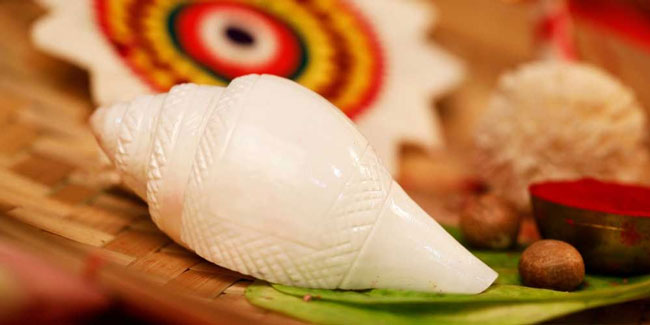
 In the ancient spiritual traditions of India, the conch, known as Shankh, is not merely a shell from the sea; it is regarded as a sacred symbol of divine power, purity, and spiritual awakening. Since ancient times, the sound of the conch has echoed through temples, homes, and sacred ceremonies, marking the beginning of prayers and religious rituals. The resonating sound of the conch is believed to create a spiritual vibration that purifies both the mind and the surrounding environment.
Mythological Significance
In Hindu scriptures, the conch holds a very important place. According to mythology, during the cosmic event known as the Samudra Manthan (the churning of the ocean), fourteen divine treasures emerged from the ocean, and the conch was one of them.
The conch is closely associated with Lord Vishnu, who is often depicted holding it in one of his four hands along with the discus, mace, and lotus. The divine conch of Vishnu is called Panchajanya, symbolizing righteousness and cosmic order.


Similarly, in the epic Mahabharata, Lord Krishna blew his conch Panchajanya at the beginning of the great battle of Kurukshetra. The sound of the conch signified the triumph of dharma (righteousness) over adharma (injustice).
Spiritual and Scientific Importance of the Conch Sound
According to traditional belief, the sound of a conch drives away negative energies and fills the atmosphere with positive vibrations. The vibration created by the conch is often compared with the sacred sound Om, which is considered the primordial sound of the universe.
For this reason, conches are blown during temple rituals, aarti, and important religious ceremonies. Many also believe that the sound waves produced by the conch help purify the air and create a spiritually uplifting environment.
Types of Conches
In religious traditions, several types of conches are recognized:
- Dakshinavarti Shankh – Considered extremely rare and highly auspicious.
- Vamavarti Shankh – The most commonly used conch in worship.
- Ganesha Shankh – A special conch whose shape resembles Lord Ganesha.
Among these, the Dakshinavarti Shankh is especially revered and believed to bring prosperity, abundance, and the blessings of Goddess Lakshmi.
Role in Religious Rituals
The conch is widely used in Hindu rituals such as worship ceremonies, yajnas, marriages, and temple aartis. Blowing the conch at the beginning of a ritual is considered a way to invite divine energy and sanctify the surroundings.
Conclusion
The conch is far more than a ritual object; it represents divine presence, spiritual purity, and victory of truth over falsehood. Its sacred sound reminds humanity of the eternal path of righteousness and harmony with the universe.