

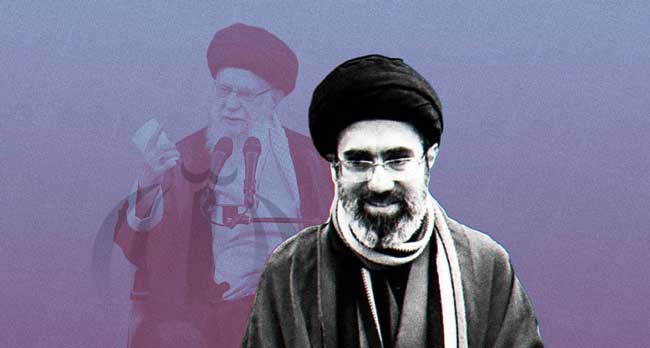
Fresh speculation is rippling through West Asia as reports emerge about a possible leadership transition in Iran. Citing the state broadcaster Islamic Republic of Iran Broadcasting, local media outlets have suggested that Mojtaba Khamenei—the son of Supreme Leader Ayatollah Ali Khamenei—may be poised to assume the country’s highest authority. No official confirmation has been issued so far, but the reports have already ignited debate within diplomatic and policy circles worldwide.
A Controversial Succession?
At 56, Mojtaba Khamenei is the second eldest son of Ayatollah Khamenei. Unlike many senior clerics in Iran’s hierarchy, he has never held a formal high-ranking religious title nor occupied an official government post. Yet analysts have long described him as an influential behind-the-scenes figure with deep ties to the country’s security establishment.
Should he formally assume the role of Supreme Leader, it would mark an unprecedented moment in the history of the Islamic Republic—effectively introducing a dynastic element into a system that, in principle, is designed to be clerically institutional rather than hereditary. Among sections of Iran’s Shiite establishment, the idea of a son directly succeeding his father remains controversial.


Wealth, Sanctions, and Global Scrutiny
Mojtaba Khamenei’s financial footprint has also drawn international attention. In 2019, the United States imposed sanctions on him, citing his alleged role in supporting the Supreme Leader’s office and related institutions.
Reports from outlets such as Bloomberg have claimed that Mojtaba oversees or is linked to extensive international investments. While his exact net worth remains unknown and difficult to verify independently, various reports allege holdings in Western markets, Swiss bank accounts, and even a luxury property in the United Kingdom valued at over £138 million. These claims remain subject to limited public confirmation but underscore the level of global financial scrutiny surrounding him.
Family and Political Networks
Mojtaba is reportedly married to Zahra Haddad-Adel, the daughter of prominent conservative politician Gholam-Ali Haddad-Adel, a former speaker of Iran’s parliament. This alliance further consolidates ties between influential clerical and political families within the Islamic Republic.
Details about their private life are scarce. Some reports mention that the couple has three children, though such information has not been officially confirmed. There have also been unverified claims circulating in regional media regarding the death of his wife amid heightened regional tensions—claims that remain unsubstantiated.
The IRGC Factor
A critical dimension of Mojtaba’s potential rise involves his reported connections with the Islamic Revolutionary Guard Corps (IRGC), Iran’s powerful military and security institution that plays a central role in both domestic politics and regional strategy.
Under Iran’s constitution, the Supreme Leader is selected by the Assembly of Experts, a clerical body entrusted with appointing and overseeing the country’s highest authority. However, several international observers suggest that the IRGC’s influence could weigh heavily in any final decision.
Interestingly, earlier reports had indicated that Ayatollah Khamenei himself had once excluded Mojtaba from a shortlist of potential successors. If current speculation proves accurate, it would signal shifting internal dynamics at the apex of Iran’s power structure.
Regional and Global Implications
Iran remains a central actor in regional geopolitics—from tensions with Israel and the United States to its influence across Iraq, Syria, Lebanon, and Yemen. Any leadership transition at the top could significantly affect both domestic governance and foreign policy orientation.
For now, the world awaits formal confirmation. But even the prospect of Mojtaba Khamenei ascending to the position of Supreme Leader has already raised fundamental questions: Will Iran’s system demonstrate institutional continuity, or is it entering a new phase marked by deeper centralization of power within a single family?
In a region defined by volatility, the answer could have far-reaching consequences.