
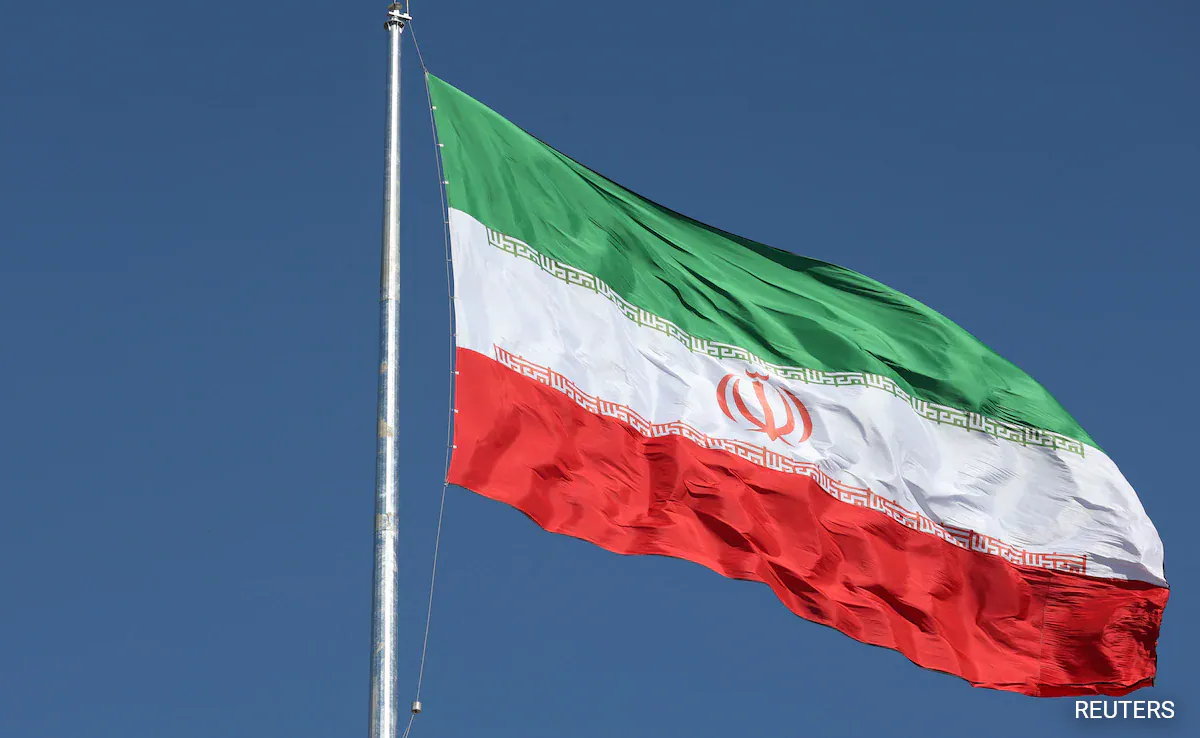
In recent years, especially amid escalating tensions in West Asia, Iran is often mistakenly grouped with Arab countries such as Saudi Arabia, the United Arab Emirates, or Iraq. While geographically close, predominantly Muslim, and sharing some cultural interactions, Iran is fundamentally different from Arab nations. The distinction lies in its ethnic roots, language, history, religion, and civilization, which together form a unique Persian identity.
Historical Roots: Persia Before Islam
Iran’s history stretches back thousands of years, long before the rise of Islam or Arab political dominance. Known historically as Persia, Iran was home to some of the world’s earliest and most sophisticated civilizations:
- The Elamite civilization (circa 2700–539 BCE) was one of the first organized states in the region.
- The Achaemenid Empire (550–330 BCE), founded by Cyrus the Great, created one of history’s largest empires, stretching from the Mediterranean to the Indus Valley. It was famous for administrative brilliance, tolerance, and cultural diversity.
- Successive Parthian and Sasanian empires (247 BCE – 651 CE) reinforced a distinctly Persian civilization, excelling in art, architecture, literature, and governance.
These empires predate Arab history and form the core of Iranian national identity. Even after the 7th-century Arab Muslim conquest, Persian culture adapted rather than vanished, preserving its language, literature, and administrative traditions.


Language: Farsi vs. Arabic
One of the clearest markers of Iranian identity is language. The official language of Iran is Persian (Farsi), which belongs to the Indo-European language family, alongside English, Hindi, Russian, and French. Persian grammar, vocabulary, and phonetics are entirely distinct from Arabic:
- Persian includes sounds like p, ch, g, zh, which do not exist in Arabic.
- While modern Persian uses a script derived from Arabic letters, the underlying language structure remains non-Arabic, making it mutually unintelligible with Arabic.
Arabic, by contrast, is a Semitic language, spoken natively across the Arab world. This linguistic distinction underscores that Iran is not part of the Arab cultural and ethnic sphere.
Ethnicity and Demography
Iran’s population is ethnically diverse but predominantly Persian, forming about 60% of the population. Other significant groups include:
- Azeris
- Kurds
- Lurs
- Baluchis
While a small Arab minority exists in southwestern Iran near the Persian Gulf, they do not define the national identity. In contrast, Arab nations are characterized by a majority Arab population whose ancestral roots trace to the Arabian Peninsula.
Religion and Cultural Identity
Religion in Iran further differentiates it from its Arab neighbors:
- Shia Islam is the state religion and practiced by the majority.
- Most Arab countries are Sunni-majority, shaping different religious and political traditions.
- Iran’s pre-Islamic heritage, particularly Zoroastrianism, contributed major festivals like Nowruz, still celebrated nationwide, predating Islam by centuries.
Cultural practices, literature, and arts in Iran stem largely from Persian civilization, distinct from Arab traditions.
Political and Regional Distinctions
Iran’s identity is also reflected in its geopolitical alignment:
- Iran is not a member of the Arab League, which comprises Arabic-speaking nations.
- Politically and culturally, Iran often follows paths independent of Arab coalitions, despite sharing borders and occasional conflicts with Arab states.
- In international conflicts, especially involving the Middle East, it is incorrect to assume Iran operates as an Arab state; its strategies and alliances are guided by Persian nationalism and Shia identity.
Misconceptions in Modern Media
Western and global media often blur the lines between Iran and the Arab world, especially in coverage of conflicts involving Israel, Saudi Arabia, and Iran. This oversimplification ignores centuries of distinct Persian history, culture, and language. Iran’s identity cannot be reduced to geography or religion alone—it is a civilizational identity, preserved over millennia.
Conclusion
Iran is not an Arab nation. Its ancient Persian roots, unique language, Shia-majority population, rich pre-Islamic and Islamic history, and distinctive culture collectively define a nation and civilization separate from the Arab world. Understanding this distinction is crucial for anyone seeking to grasp the political, cultural, and historical dynamics of West Asia.