

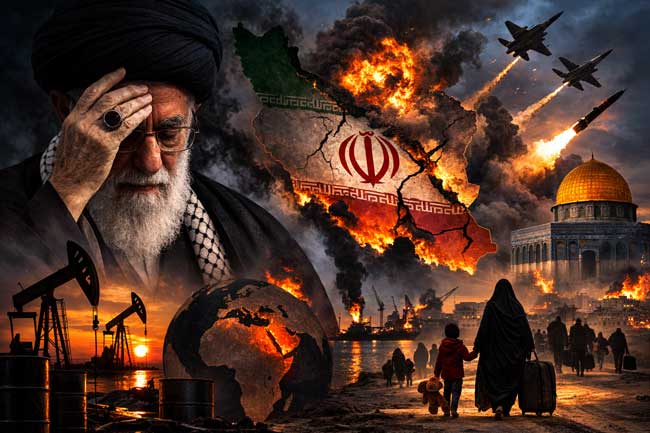
The recent killing of Iran’s Supreme Leader Ayatollah Ali Khamenei in strikes by the United States and Israel has dramatically altered the geopolitical landscape of the Middle East. Khamenei’s 47-year rule has come to an end, and with it, the possibility for the U.S. to influence the formation of a pro-American government in Tehran has gained new momentum.
Immediately following his death, a verse from the Quran was shared from his account, signaling that his supporters remain committed to fulfilling their vows to Allah.
The repercussions of this event are likely to be felt across the world. The first and most immediate impact could be on global energy markets. Rising tensions may push up the prices of petrol, diesel, and natural gas, driving up electricity and energy costs as well. Inflation may accelerate as higher fuel and energy prices directly affect transportation, food, and medicine.


The situation in the Middle East could escalate further. Iran’s allied groups, such as Hezbollah and the Houthis, may become more active, potentially extending the conflict to Israel, Lebanon, and Yemen. The United States may be compelled to increase its military presence in the region, deploying troops on a larger scale.
Khamenei’s death could also accelerate Iran’s nuclear ambitions, as the country may see nuclear development as essential to its security and survival. Meanwhile, major Asian powers—Russia, China, and India—have so far maintained a cautious distance, but their future stances could significantly influence the region’s direction.
If the Strait of Hormuz were to be closed, global oil supply could be severely disrupted, directly affecting countries like India. The Indian stock market may also feel the impact, with energy and oil-related shares potentially declining as investors react to heightened uncertainty.
A surge in refugees from Iran and neighboring countries may occur, intensifying refugee crises in Europe and Asia. At the same time, the credibility of the United Nations could face serious challenges. Despite repeated calls for respect for sovereignty, the U.S. actions highlight the UN’s limited ability to enforce international law in such situations.
The death of Khamenei marks a turning point in Middle Eastern politics, global energy markets, and international balance of power. The coming months are likely to reveal the full extent of its far-reaching consequences.