

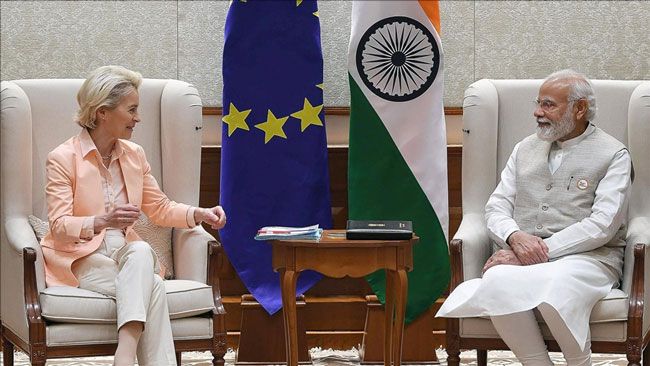
New Delhi: India and the European Union (EU) have reached a significant understanding on key provisions of a Free Trade Agreement (FTA), including the ‘Most Favoured Nation’ (MFN) clause, marking a major step forward in strengthening economic ties between the two sides.
The development comes after nearly two decades of intermittent negotiations aimed at deepening trade and investment relations. Under the proposed framework, both India and the European Union will extend MFN status to each other, ensuring non-discriminatory market access and equal trade treatment in line with global trade norms.
Major Tariff Reductions Planned
As part of the agreement, tariffs on over 96 percent of traded goods are expected to be reduced or eliminated in a phased manner. Most duties are likely to be brought down to zero within seven years, with the full implementation process projected to conclude within about a decade.


The European Union is set to open nearly 99 percent of its market to Indian goods, while India will also significantly reduce tariffs on European products. However, sensitive agricultural sectors such as dairy, rice, sugar, and beef have reportedly been kept outside the agreement to safeguard domestic interests.
Gains for India
Indian sectors including textiles, leather, gems and jewellery, and seafood are expected to gain improved and largely duty-free access to European markets. Experts believe that India’s exports to the EU could potentially double by 2032, providing a strong boost to manufacturing, small and medium enterprises, and employment generation.
Benefits for Europe
European automobile manufacturers and the wine and spirits industry are likely to benefit from reduced import duties in India. Estimates suggest that European companies could save billions of euros annually due to tariff reductions, enhancing competitiveness and encouraging greater investment flows.
Cooperation Beyond Goods
The agreement also includes commitments to align food safety and plant health standards with World Trade Organization norms. In addition, both sides have agreed to strengthen cooperation in digital trade, data protection, and privacy frameworks while retaining regulatory control over cross-border data flows.
Analysts view the agreement as a strategic move that could reinforce India-EU economic engagement and position both partners more strongly within global supply chains. The next step will involve finalising the legal text and setting a timeline for formal implementation.