
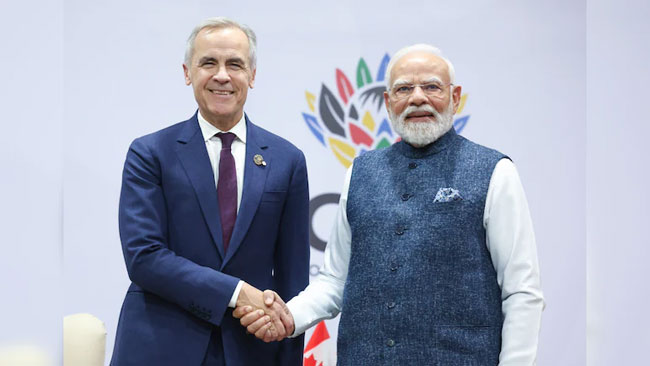
Desk: The Canadian federal government has signaled a significant shift in its position regarding India, stating that it no longer believes India is linked to violent crimes occurring on Canadian soil. The statement comes just ahead of Prime Minister Mark Carney’s anticipated visit to India, indicating a possible thaw in strained bilateral relations.
Shift After Security Dialogue
According to a report by Toronto Star, a senior Canadian official, speaking on condition of anonymity, said that extensive diplomatic discussions — including talks between national security advisers — have taken place between the two countries. The official stated that the alleged violent activities previously raised as concerns are no longer ongoing.
Another official emphasized that if such activities were still believed to be happening, the Prime Minister’s visit would not have been scheduled.

Canada is now pursuing what it describes as a “pragmatic” foreign policy approach. Amid changing geopolitical dynamics under U.S. President Donald Trump, Ottawa is looking to deepen trade and strategic ties with India, a country of 1.4 billion people. Cooperation in sectors such as oil, gas, and artificial intelligence is expected to feature prominently during Carney’s meetings in Mumbai and New Delhi with Prime Minister Narendra Modi.
Reaction from Khalistani Groups
The shift in Canada’s stance has reportedly unsettled Khalistan-supporting groups, particularly in British Columbia. Khalistan supporter Moninder Singh told the media that Vancouver police recently warned him of an imminent threat to his life and the safety of his family. He claimed this was the fourth such warning since the June 2023 killing of Hardeep Singh Nijjar.
Meanwhile, members of the organization Sikhs for Justice staged a protest at Parliament Hill opposing Carney’s India visit and demanding political action.
Background of the Diplomatic Dispute
Tensions between the two nations escalated after former Prime Minister Justin Trudeau alleged in Parliament that there were credible indications of Indian government-linked agents being involved in Nijjar’s killing. The accusation led to a diplomatic standoff, including the expulsion of diplomats by both countries.
In October 2024, the Royal Canadian Mounted Police also linked the Indian government to violent crimes and threats against Khalistani activists in Canada, though no public evidence was presented. At the time, India’s High Commissioner to Canada, Dinesh Patnaik, dismissed Canada’s response as “immature.”
Trade and Security to Move Forward Together
Canada’s International Trade Minister Maninder Sidhu, who is accompanying Carney on the India visit, said both countries have agreed to enhance cooperation in law enforcement and appoint liaison officers in each other’s countries. He emphasized that ensuring community safety and strengthening economic ties can proceed simultaneously.
The latest developments suggest a cautious reset in India–Canada relations, with both sides attempting to balance security concerns and economic interests.