

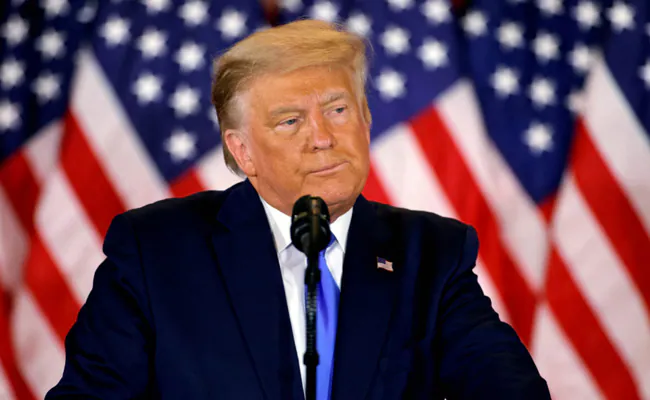
Desk: Ahead of the crucial talks in Geneva, the United States has once again issued a strong warning to Iran. U.S. Vice President JD Vance said that President Donald Trump prefers a diplomatic solution, but the option of military action remains available if necessary. He stressed that American warnings should be taken seriously and that no “unstable regime” can be allowed to possess nuclear weapons.
According to media reports, Vance sent a clear message to Tehran not to mistake diplomacy for weakness. “You cannot allow the world’s most dangerous and unstable regime to have nuclear weapons,” he said. He added that the President has multiple tools at his disposal to ensure that Iran does not acquire nuclear arms and expressed hope that Iran would approach the upcoming talks with seriousness.
Vance stated that the United States hopes to reach a solution without military intervention. However, if required, the President has the authority to use force.

U.S. Position on Iran’s Supreme Leader
During an interview, when asked whether removing Iran’s Supreme Leader was also a potential objective, Vance avoided giving a direct answer. He said President Trump would decide how best to ensure that Iran never obtains nuclear weapons, emphasizing that preventing nuclear proliferation remains the primary goal.
Large-Scale U.S. Military Deployment
The warning comes amid significant U.S. military deployments in the Middle East. For the first time in decades, a large number of aircraft and warships have been positioned in the region. The move is widely seen as part of Washington’s pressure strategy ahead of the negotiations.
Meanwhile, Iran has strongly criticized President Trump’s pressure tactics. Iranian officials described his remarks as “a big lie” but maintained that an agreement could be reached through respectful diplomacy.
Analysts warn that failure of the Geneva talks could further escalate tensions in the region. With the ongoing Israel–Hamas war already destabilizing the Middle East, regional powers fear that any new confrontation could ignite a broader conflict. All eyes are now on the upcoming negotiations, which may determine whether diplomacy prevails or tensions intensify further.