
India’s Republic Day parade has never been merely a showcase of military strength and cultural diversity. On rare occasions, it has also served as a stage for diplomatic signalling. In the history of India–Pakistan relations, there have been two notable instances when representatives from Pakistan were invited as Chief Guests at India’s Republic Day celebrations. Both occasions reflected periods when dialogue and reconciliation were still being cautiously explored between the two neighbours.
1955: A Gesture of Reconciliation After Partition
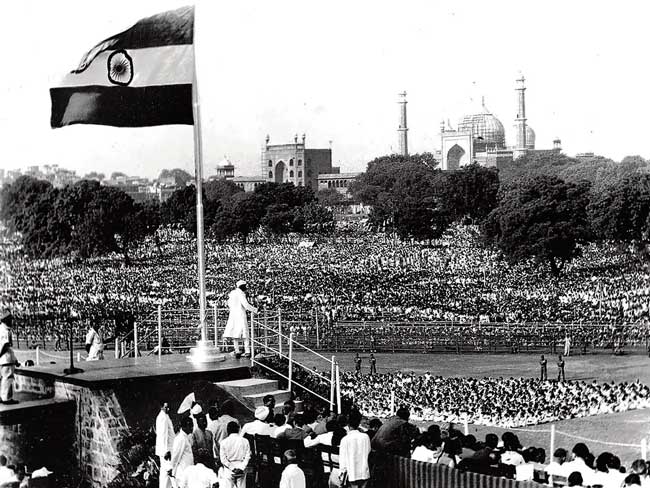
The first such instance occurred in January 1955, when Pakistan’s then Governor General Sir Malik Ghulam Muhammad attended the Republic Day celebrations as Chief Guest. That year was significant, as the parade was held on Rajpath (now Kartavya Path) for the first time. The invitation was extended by Prime Minister Jawaharlal Nehru at a time when bilateral relations were strained following the Partition of 1947 and the first India–Pakistan war over Kashmir.
Ghulam Muhammad, a former officer of the Indian Civil Service, had been knighted by the British government in 1946. In Pakistan, however, he was a controversial figure, having dismissed Prime Minister Khawaja Nazimuddin’s government and dissolved the Constituent Assembly—moves that significantly weakened Pakistan’s constitutional framework. Despite this, India viewed his presence in New Delhi as a symbolic act of goodwill, signalling that diplomatic engagement remained possible even amid deep political differences.


1965: Hope for Normalisation, Shadowed by Conflict
The second occasion came a decade later, in January 1965, during the prime ministership of Lal Bahadur Shastri. Pakistan’s Minister for Food and Agriculture, Rana Abdul Hamid, was invited as Chief Guest. He belonged to the influential Rana family of Sindh, whose historical roots are often traced to Hindu Soda Rajput lineage.
At the time, both countries were officially exploring ways to improve relations. However, beneath the surface, military preparedness and strategic assessments were underway on both sides. India presented the invitation as a confidence-building measure, but subsequent events soon undermined these efforts.
Infiltration and the Debate Over Diplomatic Outreach
In April 1965, Pakistan launched Operation Desert Hawk in the Rann of Kutch, leading to armed clashes along the border. A ceasefire was brokered in June through British mediation. However, in August, Pakistan initiated Operation Gibraltar, sending infiltrators into Jammu and Kashmir, which ultimately escalated into the full-scale war of September 1965.
These developments triggered intense debate within India over the wisdom of extending such diplomatic gestures. Congress leader B. G. Kher defended the invitations as a “soft bridge” for dialogue, while leaders such as C. Rajagopalachari urged greater caution. Critics argued that such gestures risked conveying strategic complacency or undermining India’s sovereignty. While much of the press framed the invitations as diplomatic courtesy, public sentiment remained deeply anxious about border security and Pakistan’s intentions.
Lessons From History
Today, as India–Pakistan relations once again remain marked by distrust and stagnation, these two Republic Day precedents serve as historical reminders. Symbolic diplomacy can create openings for dialogue, but lasting peace cannot rest on symbolism alone. It requires consistent policy, credible intent, and responsible conduct—lessons that history has repeatedly reinforced.