
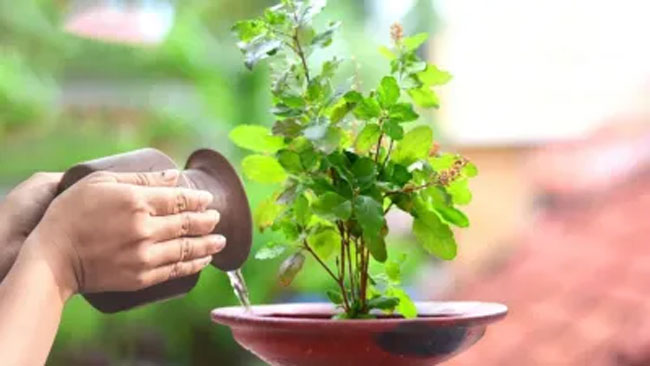
In Indian tradition, Tulsi shouldn’t be merely a plant; it’s a residing image of the sacred bond between human beings and nature. For hundreds of years, this modest inexperienced herb has dwelled in our courtyards, temples, and collective reminiscence as a quiet but highly effective divine presence. Our reverence for Tulsi springs not solely from non secular sentiment but additionally from its religious, medicinal, and ecological significance.
The spirituality embedded in Tulsi gently reveals a profound fact—purity doesn’t come up from exterior rituals however from the inherent nature of the soul. The plant’s vibrant inexperienced leaves, its delicate perfume, and its distinctive therapeutic virtues remind us that each component of nature carries a contact of the divine. Sitting close to Tulsi, one naturally feels a serene vitality, a pure vibration that calms the stressed thoughts. That is why conventional households consider that the presence of Tulsi brings positivity and sanctity into the house.
Historic Vedic texts describe Tulsi because the “giver of life.” It earns this title not merely by curing bodily illnesses however by nurturing psychological readability and elevating the spirit. As its aromatic leaves infuse the air, the human thoughts turns into lighter, extra serene, and inwardly balanced. Fashionable science additionally acknowledges Tulsi’s outstanding skill to purify the ambiance, neutralizing dangerous parts and restoring freshness.


But Tulsi’s deepest significance goes past bodily therapeutic. Its most profound message is that the divine typically resides in simplicity. This humble plant teaches that spirituality doesn’t demand elaborate rituals or grand expressions; it dwells in sincerity, stillness, and selfless existence. Tulsi grows quietly, spreads its perfume with out searching for reward, and affords therapeutic with out expectation. In doing so, it imparts one in every of life’s highest classes—purity, compassion, and selflessness are the true foundations of a religious life.
Inside the Indian family, Tulsi represents the concord of physique, thoughts, and soul. Lighting a lamp earlier than the plant within the morning or providing water at nightfall shouldn’t be merely a ritual. It’s an act of acknowledging the vitality that awakens the interior divinity inside us. It turns into a easy type of meditation—an intimate dialogue between the person and nature.
In an age overwhelmed by stress, restlessness, and emotional fatigue, Tulsi calls us again to a extra balanced and significant way of life. It invitations us to return to that mild rhythm of life the place peace was not sought however naturally skilled; the place breath carried perfume and days carried stability. Its quiet greenness affords a pathway to religious homecoming, reminding us that therapeutic and concord start from inside.
Tulsi is not only a plant rooted in soil—it’s the evergreen purity rooted inside us. Once we give it a spot in our lives, we do greater than nurture a herb; we domesticate a sacred anchor inside our personal being.