
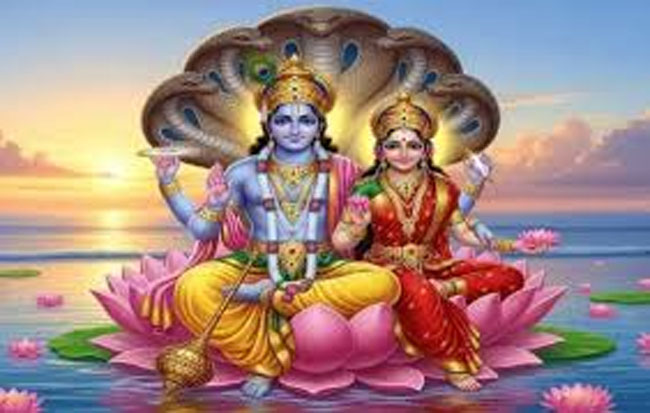
The month of Margashirsha arrives with a serene non secular aura, and amongst its most vital observances is Mokshada Ekadashi. Celebrated on the Shukla Paksha Ekadashi of this month, it’s believed to be a strong day for internal purification, liberation from previous karmic burdens, and non secular elevation. This 12 months, Mokshada Ekadashi falls on 1 December, a Monday—an auspicious coincidence because the day is devoted to each Lord Shiva and Lord Vishnu. Their mixed blessings are believed to deliver profound peace, energy, and non secular upliftment.
At the present time additionally marks Gita Jayanti, the momentous event when Lord Krishna imparted the timeless knowledge of the Bhagavad Gita to Arjuna on the battlefield of Kurukshetra.
The Religious Significance of Mokshada Ekadashi
In Hindu philosophy, liberation or moksha isn’t merely the state past life—it’s the internal freedom attainable even whereas dwelling. Mokshada Ekadashi is thought to be a key non secular observance guiding seekers towards this state of purity and self-realization.
Custom holds that observing a quick on today, accompanied by worship, meditation, and self-restraint, dissolves accrued sins, calms the thoughts, and results in peace and prosperity.
One other deeply held perception is that the advantage of this quick may be provided to 1’s ancestors, particularly those that didn’t attain a peaceable non secular passage. By this observance, they obtain liberation from struggling. For that reason, Mokshada Ekadashi can also be revered as a day of ancestral redemption.

Scriptures advise that each particular person, no matter circumstance, ought to observe this Ekadashi with sincerity. Its advantage uplifts not solely the devotee however complete ancestral lineages.
Gita Jayanti and Maun Ekadashi: A number of Religious Dimensions
This 12 months, Mokshada Ekadashi coincides with Gita Jayanti and the Jain observance of Maun Ekadashi, making the day much more spiritually potent.
On Gita Jayanti, temples and non secular facilities set up discourses, Gita recitations, and research of sacred texts. It’s a celebration of the divine knowledge that teaches braveness, dharma, self-discipline, and detachment.
In Jain custom, this Ekadashi is noticed as a day of silence and deep reflection. Devotees stay in silence, observing self-restraint, meditation, and non secular self-discipline all through the day. At main Jain pilgrimage websites equivalent to Pawapuri, worship and meditation start at daybreak, marking the day as certainly one of profound non secular introspection.
Timings and Ritual Observance
In keeping with the Panchang, the Ekadashi tithi begins at 9:29 PM on 30 November and ends at 7:01 PM on 1 December.
Following the rule of udayaatithi, the quick and rituals might be noticed on 1 December.
Mokshada Ekadashi is not only a date on the calendar—it’s a non secular invitation. It encourages seekers to show inward, to mirror upon the everlasting truths of life, and to stroll the trail of liberation with devotion, humility, and consciousness.